King Louis XIV of France called it the ‘wine of kings, the king of wines,’ but remarkably, this Hungarian wine remains under the radar for many wine lovers today. For over a thousand years, Tokaj wines were served to royalty, and now, they are a treasure for modern travelers to Hungary to discover.
A perfect opportunity to immerse yourself in Hungary’s Tokaj wines may be before or after a Danube river cruise beginning or ending in Budapest. The wine region is a couple of hours east of Hungary’s capital, and makes a perfect oenophiles’ pre- or post-cruise extension of your cruise.
Tokaj is a town in the north-east part of the country, but the name represents the entire region of over two dozen villages, about 13,000 acres of vineyards, and hundreds of small wineries.
You mention the city of Bordeaux and everyone immediately thinks of its eponymous wines. But not nearly as many think ‘wine’ when they hear the name Tokaj.
Yet Tokaj claims to be the first defined wine region in the world, dating back to 1737 when a royal declaration listed 22 villages that were permitted to use the Tokaj name for their wines.
Tokaj wines owe their fame to a ‘friendly’ fungus, botrytis, highly valued for centuries by winemakers who call it ‘noble rot.’ Under the right climate and local weather conditions, it works away on wine grapes, shriveling them up. That concentrates the juice remaining, leaving a sweet-tart flavor and a new range of aromas including peach, honey and orange.
Grapes with ‘noble rot’ are the heart of Tokaj wines – the world’s first botrytized wines. Bordeaux’ Sauternes, for example, have not been around nearly as long as Tokaj.
Two white wine grapes native to Hungary account for nearly all the vines in Tokaj, and both furmint and Hárslevelű grapes have one very important quality: they attract the friendly botrytis fungus.
With uniquely local grapes that attract botrytis, a unique microclimate with humidity from two rivers that converge in the town of Tokaj providing ideal conditions to grow the fungus, long and dry autumns that allow the grapes to dry out and concentrate, and ancient volcanic minerals lending unique terrain and flavor to the grapes, Tokaj was blessed with perfect conditions to be a legendary wine region.
Winemakers kept refining their Tokaj wines, also carving a vast system of wine caves out of the rock and hillsides beginning in the 1400’s that offered the ideal temperature, humidity and growth of the mold highly valued by winemakers for ageing wine.
While Tokaj wine production waned behind the Iron Curtain, a 'Tokaj Revolution' followed the reopening of Eastern Europe three decades ago. Today, the ‘wine of kings, the king of wines’ has been restored to its full glory, with small winemakers still relying on the same local grapes, conditions, ancient caves and traditional methods to produce new vintages of the world’s oldest designated and botrytized wine.
But the secret isn’t fully out yet, even after the Tokaj wine region Historic Cultural Landscape was declared a UNESCO World Heritage Site in 2002.
Unique, historic wines you can taste in intimate wineries dotting stunning hillside landscapes in a designated wine region that still remains off the beaten path for many wine travelers – that should put a journey to Tokaj on the top of any wine lover’s list.
Start Your Wine Trip!
By: Lynn Elmhirst, cruise/ travel journalist.
Image: Getty
All rights reserved. You are welcome to share this material from this page, but it may not be copied, re-published, broadcast, rewritten or redistributed.
by Lynn Elmhirst
on 04/13/2023
Mexico's Yucatan Peninsula is the most popular travel destination in the country, home to the legendary Riviera Maya and hot spots like Cancun, Cozumel, Playa del Carmen and Tulum, plus the island of Cozumel, a popular Western Caribbean cruise port of call.
Whether you're looking for all inclusives and high energy, or laid back, off-the-beaten track exploration, the cultural and gastronomic hub of Mexico's southeast, picturesque towns and jungle environments, the mystique of 18 archeological sites and four historic 'Magical Towns' and a hundred intriguing cenotes or natural pools, chances are, your holiday will also involve beach time. Lots of beach time.
The state has almost 250 miles of some of the highest rated beaches in the country. These 7 consistently rank in the top spots for the most beautiful beaches in Yucatan:
Celestun: A natural and eco-tourism paradise, Celestun is home to exceptional landscapes where beaches dotted with abundant coconut palms and mangroves are an ideal setting for outdoor activities. This area is part of the World Heritage Special Reserve of the Ría Celestun biosphere, which is home to approximately 400 species of migratory birds that arrive between December to March, making for an incomparable natural spectacle.
Telchac: An hour away from the capital city Merida lies the peace and quiet of the port of Telchac. Its calm waters are perfect for swimming in complete tranquility. Here, you can also visit the Museum of the Sea, which exhibits species of marine fossils, snails, shells and more.
Xtampu & X'Cambo: Not far from Telchac is the beautiful Rosada Lagoon, with its unforgettable vivid pink color. It comprises part of Xtampu’s lagoon, where — in addition to taking spectacular photos — you can learn about the process of salt extraction. While in the area, you can also immerse yourself in ancient Mayan culture by visiting the archaeological zone of X'Cambo, one of the few ruins close to the coast, which is believed to have been an ancient fishing port that supplied the main Mayan cities with food.
Cancunito: Located in Río Lagartos — a three hours drive from the capital and very close to Las Coloradas, famous for its large pink pools — Cancunito stands out as one of Yucatan’s most spectacular virgin beaches. With its fantastic natural setting, this tropical paradise has abundant mangroves as well as coastal dunes. It's part of an ecosystem where species such as Hawksbill, White, and Loggerhead sea turtles arrive to spawn.
San Felipe: Half an hour away from Cancunito lies the small fishing and tourist port of San Felipe, where you’ll find rustic wooden houses in a mix of cheerful colors. Enjoy a day at the town beach with its white sands, turquoise waters and tranquility are a relaxing escape. San Felipe has become one of the most popular spots in Yucatán for nature lovers who come for its vibrant natural surroundings.
Río Lagartos: A small traditional fishing port that today is one of the best kept “secrets” in the Yucatan Peninsula, the town lies right at the entrance to the well-known Ría Lagartos Reserve Natural Park, where you can explore a fascinating environment that’s home to crocodiles, sea turtles and hundreds of species of birds, including flamingos and pelicans.
El Cuyo: At the northeastern tip of Yucatan, El Cuyo is just three hours from the state capital. This little paradise is one of the most unique corners of the state, lying right at the end of the Costa Esmeralda. Its main claim to fame is being the place where the Gulf of Mexico and the Caribbean Sea meet. The mix of currents and winds make the area ideal for sports such as sailing and kitesurfing.
Start Your Mexican Beach Vacation!
Images courtesy of Yucatan's Ministry of Tourism
All rights reserved. You are welcome to share this material from this page, but it may not be copied, re-published, broadcast, rewritten or redistributed.
by Lynn Elmhirst
on 03/09/2023
Spring Break is high season for family travel, and with every member of the family more digitally connected than ever at home and away, that means posting about good times on vacation. Not so fast, warns one insurance company, which is advising travelers of the risks of ‘over-sharing.’
A new survey commissioned by the Allstate insurance company revealed that almost one-third of social media users post content about their vacation plans online. That’s before AND during, not just afterwards, and that’s the trouble.
According to the insurance provider, “sharing that you’re away could expose your home to a break-in.” It points out that announcing in a public place for friends – and the not-so-friendly – to see that your home is empty, exposes you to risk.
In addition, people who, in an excess of enthusiasm, post photos of tickets and even passports, may end up providing unsavory characters with enough information for identity theft.
That’s the last kind of souvenir you want of your holiday!
I know – you would never post something unwise on social media. The survey shows that the proportion who post before or during their travels is highest among those 18-34 years of age, at 46%. But those with children still rank above the average one-third at 36%, and among those going away for Spring Break, 45% admit they plan on posting to social media before and during their trips.
So – on Spring Break vacations and anytime you take a trip, think before you post. And here are some social media safety tips:
- Hold off on posting that selfie until you return from your vacation. This includes sharing details on social media before and during your trip. Your friends and family will be just as envious of your trip if you post pics after you return home.
- Check the privacy and security settings of your social media accounts, and review who has access to your personal information. Even if you have set rigid privacy settings for your social media accounts, it's still possible for others to view what you post through the accounts of friends and followers.
- Review pictures you’ve previously posted on your profiles and remove any information someone might use to find your home address. Look carefully! Sometimes that information isn’t written on a document, but can be found in the background of photos.
- And avoid posting photos with geotagging as it can reveal your location in real time; turn off geolocation data on your phone.
- Review social media posting ground rules with young people traveling with you.
One more thought: if you’re vacationing right, you’re having the time of your life. Why waste any of those precious moments on social media?
Start Your Trip!
Image: Getty
All rights reserved. You are welcome to share this material from this page, but it may not be copied, re-published, broadcast, rewritten or redistributed.
by Lynn Elmhirst
on 03/09/2023
The Four Seasons Resort Tamarindo recently opened in one of the most unique and rare locations: along a pristine, 6-mile stretch of coastline, part of a 3000-acre nature reserve on Mexico’s Pacific coast.
Just 2% of the landscape will be developed, with the resort company saying it’s committed to preserving “the natural landscape, celebrating Mexico’s rich heritage and providing the ultimate luxury travel experience” at the property.
'In Tamarindo, Four Seasons guests will feel connected to the jungle, the ocean, and to one another. The Resort immerses guests in the wonders of the natural world,' says Christian Clerc, President, Four Seasons Hotels and Resorts.
'We are deeply grateful to our owner-partners, whose family has cared for this land for generations, and are now trusting Four Seasons and our people to share in their commitment to preserving this beautiful destination and celebrating its remarkable culture.'
Four Seasons Resort Tamarindo provides transfers for guests arriving at Manzanillo’s airport on scheduled or private flights. The Resort is also accessible from Mexico City and also has its own pier for guests arriving via private yacht.
Resort Amenities
Guests stay at one of just 157 cliffside and beachfront accommodations - many with private pools – along with authentic dining options, spa and wellness experiences, three pools and three nearly-deserted beaches for watersports and long days in the sun.
Long a favourite of serious golfers, the David Fleming-designed El Tamarindo 18-hole links golf course is now a Four Seasons resort experience. With winding fairways through tropical jungle and along the rocky coastline, it's recommended that golfers pack a camera in their bag to capture every moment. And, with the number of golfers on course at any given time strictly limited, it's like having a private course all to yourself.
Four Seasons Resort Tamarindo has formed philanthropic alliances with Ensamble Artesano and Taller Maya to protect pre-Hispanic culture, support Mexican artisans and offer financial recognition to continue valuing their work. Both organizations' craftsmanship is reflective of Mexico's abundance of beautiful, handcrafted fabrics and art. Guests are surrounded by local craftsmanship and artistry at every turn, from building architecture and design of indoor and outdoor spaces, to details ranging from artworks to tableware and team uniforms. The Resort's boutique features many handcrafted items that will allow guests to take tangible reminders of their time in Tamarindo home.
Paradise Found
Resident biologists and researchers lead guests on guided hikes along natural footpaths created by indigenous wildlife, through jungles and along the coastline. You can learn about medicinal plants used since pre-Hispanic times, and get to know the 70 endemic species and hundreds more birds, mammals, amphibians and reptiles that call Tamarindo home. Stop by the Discovery Centre to learn more about the region's biodiversity and the 'rewilding' efforts that are enabling the Earth's natural rhythms to flourish here. Guests can even be part of that conservation effort.
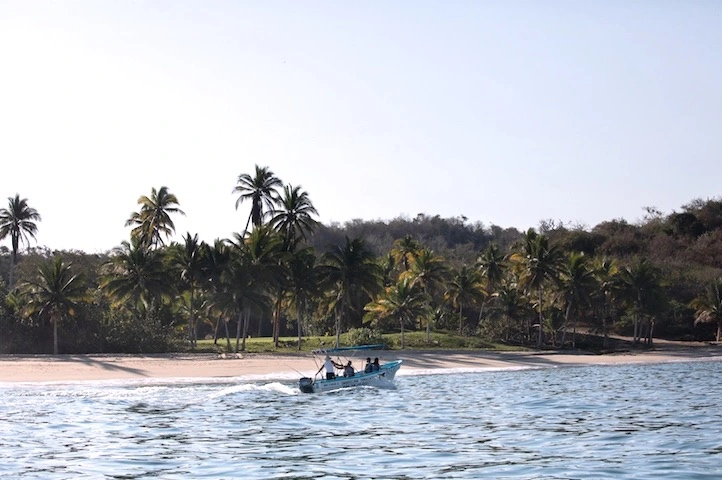
Guests can taste Tamarindo beyond the menus of the Resort's restaurants while learning about indigenous plant species at the 35-acre Rancho Ortega, where the resort’s Culinary Director and the kitchen and farm teams grow the ingredients that will appear on plates later that day. Meet La Manzanilla fishers, dive in for a macro-photography scuba tour, or paddle out to discover the Reserve's secret spots along the coast. Free divers – or those who want to try – will find that the waters off Tamarindo are ideal for underwater odysseys.
Start Your Luxury Resort Trip!
Image: Four Seasons Resorts
All rights reserved. You are welcome to share this material from this page, but it may not be copied, re-published, broadcast, rewritten or redistributed.
by Lynn Elmhirst
on 02/23/2023
In a world of over-exposure, St. Barthelemy retains its luxe mystique as one of the most exclusive, most chic islands in the Caribbean. Off the beaten track, and with French flair, this tiny island has an outsized reputation and appeal for those in the know.
Maybe it’s partly because of its (several) names. The French Caribbean island’s long and formal name is hardly ever used, in favor of its nickname, whispered among the high-end travelers and yachters who gather in this chic island destination.
So is it St. Barts? St. Barth? Or St. Barths? However you spell it, add it to your list of bucket list tropical islands.
But how to arrive – especially in style? With no direct flights from mainland North America, you have to really want to travel to St. Barths – and the very best way is by sea.
St. Barths is famously a yachting destination, with one of the most scenic sail-ins in the Caribbean.
So the top two ways to travel to St. Barths are by private yacht or luxury, small-ship cruise. You’ll want to spend every moment of your sail-in at the rail, taking in the lush green hills, sparkling azure waters – and the luxe flotilla of very sleek marine hardware and chic yachters sailing all around you.
Only yachts and smaller ships can dock in St. Barths, adding to its exclusive allure. That makes it a favorite port of call for the luxury, small-ship cruise lines on their ‘yachtsman’s’ itineraries of less-accessible, more exclusive cruise destinations. That’s why experienced cruise port collectors rejoice when they see ‘Gustavia’ on a Caribbean cruise itinerary.
Gustavia is the capital of St. Barths but you’re right, it is not a French name. It dates, like the town’s harbor fort, from the 17th century when the island was in Swedish hands.
Today, St. Barths has very French – and very exclusive character.
The island is less than 10 square miles and has only about 10,000 residents, so ‘intimate’ is baked in. With French street signs, luxury boutiques, seaside restaurants, and French spoken (or English with a charming French accent), plus picturesque beaches and island colonial architecture, St. Barths feels like a cross between St. Tropez and the tropics. You stroll off your small cruise ship and wind your way past luxury yachts, yachters and yacht crew, into a uniquely French Caribbean island experience you simply can’t experience anywhere else.
Start Your Luxury Cruise Trip!
Article and video by:
Lynn Elmhirst, Cruise/ Travel journalist and expert.
All rights reserved. You are welcome to share this material from this page, but it may not be copied, re-published, broadcast, rewritten or redistributed.
by Lynn Elmhirst
on 02/23/2023
There’s enjoying tropical rum cocktails when you’re in the Caribbean on vacation… then there’s becoming an actual “RumMaster.” Now you can spend a day with kindred ‘spirits’ immersing yourself in the history and the practice of rum on an island with a rich rum history and a growing unconventional rum scene.
St. Kitts Tourism has launched its “Kittitian RumMaster” program a pair of courses led by two of the island’s prestigious rum experts. Travellers to the island who complete both courses are given a certificate – imagine waving that at home at your next cocktail party as you shake up some rum.
While many of the islands have a long history with the spirit distilled from cane sugar, as St. Kitts’ minister of tourism says, “The history of Caribbean rum and its influential impact can be seen throughout St. Kitts.'
You don’t have to be a rum expert or a qualified barchef, you just need an enthusiasm for rum. This first-of-its-kind, one-day program gives participants a deep-dive into the history of rum and distilling rum, gain hands-on experience in creating spiced rum and the methodology of creating rum-based cocktails.
Part I: Visit Wingfield Estate – home of Old Road Rum, and the oldest surviving rum distillery in the Caribbean:
- Introduction of Rum
- History of Rum in St. Kitts
- Rum production methods
- Learning How to Taste + Identify Flavor Profiles
- Tour the estate
- Label your own rum bottle
The first part of the program is at Wingfield Estate, home of the Caribbean's oldest surviving rum distillery. During this Kittitian RumMaster course, rum expert Jack Widdowson (Founder of Old Road Rum Company) will teach rum theory and the history of rum production methods.
The recently excavated distillery is found on the 18th-century sugar cane plantation owned by a direct ancestor of U.S. Founding Father Thomas Jefferson.
While sipping Old Road Rum and learning the history, guests will see a preserved aqueduct, chimney, mill house, boiling house, and lime kiln and learn how to label their own rum bottle.
Part II: Visit Spice Mill – home of Hibiscus Spirits:
- Learn how to create spiced rum
- Methodology of creating classic rum drinks
- Learn nuances of creating rum cocktails
- Rum appreciation methods
The second course takes place at the Spice Mill Restaurant on Cockleshell Bay and is run by rum expert Roger Brisbane. He continues to innovate the rum space for St. Kitts with Hibiscus Spirits. Hibiscus Spirits rum is created by infusing handpicked and locally grown Roselle Hibiscus calyx, known as sorrel, to flavour the rum and create a natural red color.
This course showcases spiced rum creation methodology, rum-blending techniques, and cocktail creations using tasting procedures and elevating nuances in different types of rums.
In addition to giving visitors a unique immersion into rum and St. Kitts’ rum culture, the program gives you the chance to spend meaningful, one-on-one time with Kittitian rum producers and owners that makes your vacation on the island even more memorable and meaningful.
Start Your St. Kitts Trip!
Image courtesy St. Kitts Tourism
All rights reserved. You are welcome to share this material from this page, but it may not be copied, re-published, broadcast, rewritten or redistributed.
by Lynn Elmhirst
on 01/26/2023
Move over corn mazes! The winter version of the classic fall countryside activity is the snow maze. And one ski resort has laid claim to the highest alpine snow maze in the world.
Colorado’s Copper Mountain snow maze opened mid-January, and with a base elevation of over 9700 feet, the snow maze’s location on the mountain next to one of its lifts puts it in record-breaking territory.
The 2500-acre alpine resort about 75 miles west of Denver has already been blessed with over 140 inches of snow this season.
Even so, the snow used to build the 8000-square foot snow maze was farmed. It was brought in from Rosi’s Run, part of the Stifel U.S. Ski Team Speed Center, a training venue the Stifel U.S. Alpine Ski Team uses to train on in the early season.
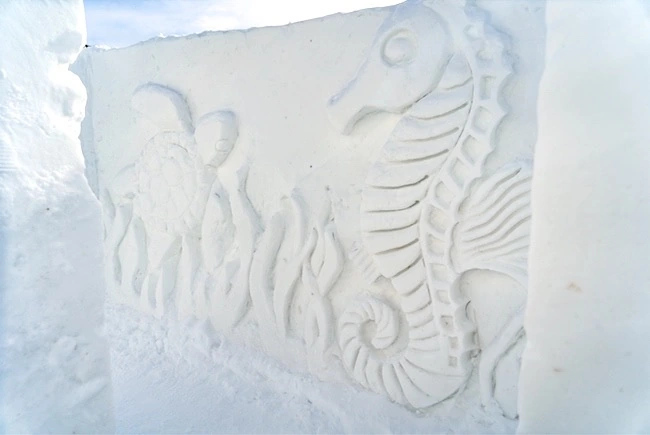
A local business that designs snow and ice sculptures around the Rockies designed the maze and built it in just 10 days. In addition to forming precision-carved walls with perfectly straight lines and crisp corners, Snice Carvings added some artistic flare in the form of whimsical designs carved into the snow walls that quickly rise up around a participant once they enter.
You may have tried corn mazes, but as you can see, there’s no peeking through (or over!) the walls of this maze! Especially since anyone 3 and older is welcome to try their wits against the maze. Don’t fear getting lost, though. Parents can access a map with the solution on Copper Mountain’s website, or, as the resort suggests, in a maze emergency, you can call the Ski Patrol for a rescue.
Can you see the solution to the maze in the top image of the maze from above? Do you think you could solve it from within?
That’s just one of the ways to celebrate the winter off your skis or boards at Copper Mountain. The maze is right next to the resort’s tubing hill, with 5, family-friendly runs that lets you hit the hill a whole different way.
Copper Mountain’s year-round Rocky Mountain coaster is one of the longest alpine coasters in North America. It lets you cruise down 5800 feet of track at speeds of up to 25 miles an hour through the forest with spectacular views.
Plus, there’s ice skating, shopping, dining and all kinds of après-ski activities in pedestrian villages that let you change gears and connect with family and friends on and off the hills.
Start Your Winter Sports Trip!
Images courtesy Copper Mountain
All rights reserved. You are welcome to share this material from this page, but it may not be copied, re-published, broadcast, rewritten or redistributed.
by Lynn Elmhirst
on 01/26/2023
Waldorf Astoria hotels’ name and hospitality still reflect its founding family, the legendary Astors, who for more than a century were the pinnacle of American high society. The Astor legacy of good living is expanding worldwide and especially in Latin America, where three new Waldorf Astoria hotels and resorts are setting new standards in travel style.
CANCUN, MEXICO
The Waldorf Astoria Cancun opened in November 2022. The 173-room ultra-luxury resort is set on 100 acres of idyllic Caribbean coastline with panoramic views of the ocean from every room, which also all have private balconies and an outdoor soaking tub.
It’s the second Waldorf-Astoria Hotel & Resort in Mexico, joining Waldorf Astoria Los Cabos Pedregal, but it’s the company’s first newly built property in Mexico.
The room-with-a-view theme continues throughout the resort. All of its five restaurants, even the ballroom, are ocean view. The resort’s design also reflects the sea, with bluestone and carpeting that evokes waves. Guests have a sense of quiet luxury and a sense of place, with refined craftsmanship in tropical woods, raw and polished finishes, pearlescent inlays and other glowing touches like warm metals. The signature Waldorf Astoria lobby clock includes marble, mother-of-pearl, and gem-like finishes. The immense spa offers indoor and outdoor treatment rooms, an outdoor pool and garden.
SAN MIGUEL DE ALLENDE, MEXICO
A third Waldorf Astoria in Mexico opens in 2025, another custom-built property, this time in the colonial city in Mexico’s inland mountains sought after by luxury travelers in the know for its art and social scene, architecture, and history.
Waldorf Astoria San Miguel de Allende will offer 120 hotel guest rooms, wellness-inspired amenities, including a state-of-the-art fitness center with yoga and meditation areas, a lavish and restorative destination-inspired spa, and a rooftop space with pools and relaxation areas with stunning views of the city.
An on-site art gallery and local artisan crafts store will also welcome guests, while family travelers will have access to the hotel’s kids and teens club. The hotel’s culinary excellence complements the array of amenities, to be experienced across three restaurants, two bars and a coffee shop.
Image: Waldorf Astoria San Miguel de Allende, courtesy of Sordo Madaleno Arquitectos.
GUANACASTE, COSTA RICA
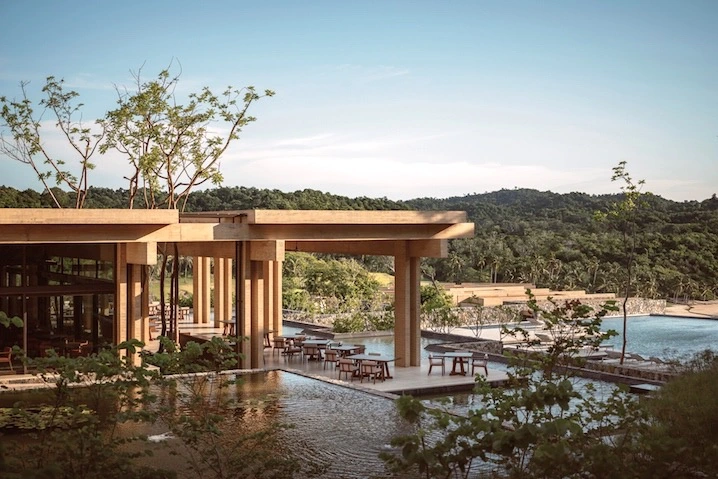
The first Waldorf Astoria Hotel & Resorts property in Costa Rica, the new-build Waldorf Astoria Guanacaste (pictured top), also opens in 2025 in a tropical eco-paradise. The 190-guest resort will focus on sustainable luxury with an emphasis on architecture that blends into the dramatic scenery, lush forests and beautiful beaches of its surroundings, and connecting guests with the natural environment. All resort vehicles will be electric.
Waldorf Astoria Guanacaste on the 200 miles of coastline of the Cacique peninsula will offer the perfect backdrop for adventure seekers, sunbathers and nature lovers alike with the area’s impressive volcanic landscapes, intimate beach coves and tropical forests.
Boasting panoramic, sweeping views overlooking the ocean, Waldorf Astoria Guanacaste will feature 190 luxurious guest rooms and suites, culinary excellence, a wellness center with outdoor yoga, and lap and thermal pools, and a cenote-inspired spa with outdoor treatment rooms emulating a tree house.
Start Your Latin America Trip!
Images courtesy of Waldorf Astoria Hotel & Resorts
All rights reserved. You are welcome to share this material from this page, but it may not be copied, re-published, broadcast, rewritten or redistributed.
by Lynn Elmhirst
on 01/12/2023
The Caribbean flamingo is an iconic symbol of the tropics, with its vivid pink plumage standing out against a backdrop of turquoise waters, green palm leaves, and pastel-colored buildings. In the Bahamas, where it’s the national bird, flamingos have made a strong comeback thanks to conservation projects. The Islands of The Bahamas may be one of the best places in the world to get up close to this iconic, almost cartoon-like wading bird.
Fun facts: the same carotenoids that make carrots orange and ripe tomatoes red also make flamingos pink. They are also found in the microscopic algae that brine shrimp eat (which is why shrimp turn pink when you cook them) and as flamingos eat the algae and brine shrimp, they also turn flamingos’ feathers pink!
No wonder a group of flamingos is called a ‘flamboyance!’
Here are three of the best places in The Bahamas to see a flamboyance of flamingos in all their glory:
Ardastra Gardens, Nassau
Ardastra Gardens in Nassau (pictured, top) is the only wildlife conservation center in The Bahamas. Don’t miss the Flamingo Show which happens three times a day, when the adorable stick-legged birds march into a white-picket-fence enclosure for some up-close viewing.
So vivid and oddly shaped, it’s tempting to think of flamingos as coming from the imagination of someone like Dr. Seuss – but they are a quirky wonder of nature, and during the Flamingo Show, these majestic birds will walk right up to you with their beaks held high in an orderly procession. Don’t miss out on this stately avian parade!
Baha Mar, New Providence Island
Maybe you’ve heard of puppy yoga or even goat yoga. The Bahamas takes stretching to the next level with Flamingo Yoga! Practice your poses with the flexible-necked birds at the Baha Mar luxury resort complex.
Image Courtesy of Baha Mar
The flamingos here are known to be friendly, and at times, goofy as they try to mimic your yoga poses right next to your yoga mat! The Flamingo Yoga sessions take place on Saturday mornings and can be booked through the Baha Mar spa.
Flamingo Cay, Nassau
Flamingo Cay is a habitat that helps preserve the flamingo population. You can walk alongside the flamingos every morning as they make their leisurely way down to the white sand beach or ask about a more intimate experience at the Flamingo Encounter.
Inagua National Park, Great Inagua
Inagua National Park was established in the 1960’s by The Bahamas National Trust as a conservation project for flamingos. The 220,000 acre park is home to the world’s largest breeding colony of West Indian (Caribbean) flamingos.
Flamingos in Inagua - Image Courtesy of The Bahamas Ministry of Tourism, Investments & Aviation
Since the early 1900’s, there had been growing concern about the Caribbean flamingo population, and the establishment of Inagua National park helped flamingos make a comeback from the brink of extinction to a colony of over 50,000 birds today. The park is even helping increase flamingo numbers beyond The Bahamas and is now a designated and protected wetland – as well as a birdwatcher’s paradise for its tremendous flamboyance of flamingos.
Start your Trip!
Image credits as noted. Top image: Ardastra Gardens & Wildlife Conservation Centre
All rights reserved. You are welcome to share this material from this page, but it may not be copied, re-published, broadcast, rewritten or redistributed.
by Lynn Elmhirst
on 12/29/2022
Break away from the beach and inject the wonder of history into your next vacation! Mexico’s ancient past comes alive at archaeological sites around the country that allow you to walk in the footsteps of the inhabitants of highly evolved societies who built pyramids, elaborate cities, and culture rivalling any ancient civilization in the world. Pre-Columbian (the era prior to Christopher Columbus’ arrival in the New World) archaeological sites are true wonders of the world. It’s not everywhere you can enjoy an epic beach vacation and walk back in time over a thousand years.
Luckily, of the top five, many can be visited from your beach resort or cruise port of call.
1. Chichén Itzá in Yucatán
More than 2 million people visited Mexico’s most famous archaeological and UNESCO World Heritage site this year, making it the most popular historic site in the country. On the Yucatan peninsula, it’s easily accessible from resorts or cruise ports in Cancun, Playa del Carmen and Tulum.
Chichén Itzá is the ruins of a 4 square mile ancient
Mayan city that was once home to 35,000 people and was a religious, military, political and commercial center that dates back 1500 years.
The most spectacular remains are of El Castillo (The Castle), a pyramid rising nearly 80 feet above the city’s Main Plaza. The four-sided pyramid has 91 steps on each side, with a top step that combine for a total of 365 steps – the number of days in a solar year. El Castillo is perfectly aligned with compass directions, and during spring and fall equinoxes (the days of the year when there are equal hours of light and darkness), shadows cast by a setting sun create an appearance of a snake on the staircases – reflecting the carving of the major snake god carved at the top.
Chichén Itzá also has the largest ball court in the Americas, a site 545 feet long and 223 feet wide, where Mayans played tlachtli. It was not a game for the faint-hearted, as carvings on the walls show victors holding the severed head of a member of the losing team.
And don’t miss the Temple of the Jaguars, which once roamed the area and whose form is still represented in front of the imposing building.
2. Teotihuacán in the State of Mexico
About an hour north of Mexico City, Teotihuacán is another vast UNESCO World Heritage Site that normally takes top spot on the most-visited list but was edged out by Chichén Itzá this year.
Teotihuacán is even older than Chichén Itzá, with its famous Pyramid of the Sun believed to have been constructed around 200 AD – 300 years before Chichén Itzá. Historically, it may be even more significant. With a population of 125,000 at its peak before 500 AD, it is believed to be the sixth-largest city in the world for its times. Its masterpieces, still standing today, including the Pyramid of the Sun and the Pyramid of the Moon with the Avenue of the Dead joining them, represent the greatest architectural achievements of the pre-Columbian era in the Americas. It’s also anthropologically important in that the city also build complex, multi-floor and multi-family residential compounds.
Don’t miss the sensational murals or the chance to take a hot air balloon ride over the ruins to get a completely different perspective and awe at the vastness of the Teotihuacán site. (Pictured, top)
3. Tulum in Quintana Roo
The 3rd most-visited historic ruins in Mexico this year registered more foreign visitors than Mexican nationals; no wonder since they are so close to popular resorts. Tulum’s archaeological sites are less than 3 miles from Tulum’s town center, less than an hour from Playa, and only one and a half hours from Cancun.
Tulum is the only Mayan city built on a coast – and one of the few protected by a wall, an imposing limestone structure over 2500 feet long and up to 16 feet high.
Much ‘younger’ than Chichén Itzá or Teotihuacán, Tulum dates from the 1200’s. The ‘Castillo,’ or Castle, is perched on the edge of a cliff overlooking the sea, thought to have been built as a watch tower. The Temple of the Frescoes is one of the best-preserved buildings with restored murals representing three levels of the Mayan world: the dead, the living, and the gods. Above the doorway of the temple is a figure with a bird’s wings and tail diving – believed to represent a Mayan god who protected the people.
4. Monte Albán in Oaxaca
Believed to date from an incredible 8th century BC, Monte Albán is in on high ground in the hills of Oaxaca. The nearest resort area is Huatulco on the coast half a day’s drive away.
Four square miles of the site are occupied by pyramids, temples, terraces, plazas and canals. The Grand Plaza has massive platform mounds at either end, and you can also see a ball-playing court, underground passageways and the most elaborate tombs yet uncovered in the Americas.
5. Palenque in Chiapas
Another UNESCO World Heritage Site, Palenque’s historic ruins and surrounding jungle together make up the Palenque National Park, which is home to howler monkeys and jaguars.
The site is 400 miles from the Riviera Maya, so you need a three-day round trip from your beach resort to see a site that rivals Chichén Itzá’s importance, especially as its Temple of Inscriptions, with hieroglyphic writings, attest to the mythology and history of the Mayan people. Palenque is also home to a 160 foot-long canal crossing the city that was the first pressurized canal in the world.
Less than 10% of the site, which dates to 200 BC, has been excavated, so many more mysteries and wonders from Palenque have yet to be revealed.
Start your Trip!
Images via Getty
All rights reserved. You are welcome to share this material from this page, but it may not be copied, re-published, broadcast, rewritten or redistributed.
by Lynn Elmhirst
on 12/29/2022






 Sue Lamb