
It’s time to go ‘off’ travel. Yes, you read that right. Two of the smartest trends in travel are about visiting bucket list destinations when everyone else isn’t, and finding new destinations other people have yet to discover.
Here’s why.
Your choice of travel season can make a big difference to your experience and travel budget. And the good news is that there’s more flexibility and options than ever.
‘High’ season is the historically most popular time to visit a particular destination. Or just the most popular time to travel, due to ‘non-negotiable’ travel events like school breaks and holidays. Whether or not you want to fight the crowds, risk delays caused by disruptive snowstorms, and pay through the nose, you’ll be gathered round the family table in time for turkey.
There’s not much you can do about non-negotiable high-season travel except opt out and plan your extended family Christmas in July.
But other high-season travel is increasingly avoidable. And more and more people are discovering that the so-called ‘off’ season might be the best time to visit.
Off-season used to be a write-off. The perfect weather or main attractions, or signature local experiences may be missing. There’s no snow on the slopes in June. In some cases, hotels are closed, the locals have all gone on their own vacations, and it’s a ghost town.
But that’s changing fast. Many destinations are transforming themselves into year-round vacation spots, a boon to the local economy as well as visitors.
Highlights of Low-Season Travel:

More people than ever are traveling, and it’s making some of the world’s top destinations victims of their own success. When prices are driven up, when housing gets diverted to vacation rentals, when places become so crowded that daily life becomes stressful and difficult, noisy and polluted, the people who live there suffer. If it drives locals away, the very culture and lifestyle we are seeking when we travel to popular destinations are eroded. Natural wonders also suffer from their popularity.
Overtourism is a tragedy for both the destination and visitors. More and more of us are concerned about the impacts of overtourism on the destination and on our own travel experience.
Like off-season travel, off-the-beaten-path travel provides a solution that’s better for everyone.
Savvy travelers are looking for the places where everyone else isn’t going. And travel companies are providing more and more options to help you discover the hidden towns, natural charms,
PRO TIP: Ask your travel advisor to help you plan a trip to new and upcoming destinations. Sometimes they are just down the road from the ‘big name’ destinations you’ve heard about, whether it’s a wine tour, an alpine outdoor adventure, or an immersion into Mediterranean lifestyle and cuisine.
There you’ll likely find, if less tourism infrastructure, a more relaxed and authentic local experience, often at better prices. With a warm welcome from residents who aren’t overwhelmed by visitors and are happy their local treasures are getting interest from outsiders. And you’re supporting a small local economy.
As destinations and travel companies change with the times, your travel advisor has the key to unlocking the secrets of successful off-season and off-the-beaten-path travel.
By: Lynn Elmhirst, travel journalist and expert.
Images: Getty
All rights reserved. You are welcome to share this material from this page, but it may not be copied, re-published, broadcast, rewritten or redistributed.
by Lynn Elmhirst on 06/12/2025
Compared to many aspects of air travel, modernizing baggage handling seems, well, pretty ‘delayed.’ Am I the only person who is astounded at the fact that, as airport security has tightened so much when it comes to travelers and their water bottles, people can still just pull any bag off a carousel and walk out the door with it? Or that we let even inexperienced travelers attach their own sticky paper luggage tags, willy-nilly, and just drop them on a conveyor belt, along with thousands of other travelers’ bags, all going to different destinations on different flights… and hope for the best that they’ll show up at the same time and place we do?
It honestly seems like a miracle that baggage so often turns out right rather than wrong.
We’ve all heard horror stories in recent years. COVID and its aftermath wreaked havoc on air travel operations. They were dark years for luggage ‘mishandling,’ as the industry calls bags that are damaged, delayed or temporarily or permanently lost.
Some airlines – and some airports – do better than others. But overall, according to the SITA Global Baggage report, just under 7 bags for every 1000 air travelers worldwide were mishandled in 2023. That’s less than 1% - and a big improvement over the previous (pandemic aftermath) year. Still, that represents over 36 million pieces of luggage – and the tiny fraction is cold comfort if your bag is one of those that goes missing.
Operations improvements and new technology are leading the way in the war against lost luggage.
Some advances have been driven by travelers themselves.
It didn’t take long for savvy travelers to adapt handy air tag technology to track their personal bags as they flew – despite early pushback from quite a few airlines and jurisdictions. Their concern was apparently the batteries, an unfounded one, as many advocates pointed out.
Not only did airlines quietly stop banning AirTags, but many have done a 180-degree turn. Now, about a couple of dozen airlines make air tag tracking an official part of their lost luggage process, allowing passengers to share the location of missing bags from their app with their airline to help locate and retrieve their bags.
And most recently, the airline industry as a whole has begun a united charge to revolutionize luggage.
The International Air Transport Association (IATA) has launched a 10-year “Global Baggage Roadmap” to modernize baggage operations around the world, with its member airlines, airports and industry partners all ‘weighing in’ on the best ways to make sure you and your bags reconnect no matter where and with whom you fly.
No surprise! IATA’s surveys show that:
So IATA’s plan includes:
IATA thinks that within a decade, no matter where we fly around the world, our bags will be on a new, technology-driven journey right there with us.
By: Lynn Elmhirst, travel journalist and expert.
Image: Getty
All rights reserved. You are welcome to share this material from this page, but it may not be copied, re-published, broadcast, rewritten or redistributed.
by Lynn Elmhirst on 05/22/2025
In 1275, no one could ever have imagined that a simple dam on the Amstel River would become a city that pioneered so many elements of modern life in the 21st century. As Amsterdam marks ¾ of a millennium, travel lovers with 20/20 hindsight can celebrate the European capital’s contributions to shaping our world today, as well as what continues to make it a beacon for visitors.
The Dutch capital marks its official start by that 13th-century document granting it city rights and allowing local residents to build a dam to manage the flow of the Amstel river without paying tolls. This pivotal moment was the foundation of transforming a tiny fishing village into a thriving urban center.
And it didn’t take long for Amsterdam to become a hub for trade, culture and innovation.
Key features of the modern Western World’s economic structure harken back to the 17th century when Amsterdam became the center of global finance and commerce:
The Dutch East India Company, founded in 1602, imported spices, textiles and precious metals from the Far East. It was the first company in the world to offer publicly traded shares.
And said to be the most valuable company EVER: valued at its peak at over $8.2 trillion in today’s dollars – far more than even today’s mega corporations. (Today’s most valuable companies are Microsoft, Apple and Nvidia, each worth less than half that.)
The Amsterdam Stock Exchange, also founded in 1602, was the world’s first modern stock market (the city was also home to the first-ever international bond market and other banking and insurance innovations).
Immense trade fortunes translated into cultural and architectural riches, including:
landmarks like Dam Square and the Canal Ring
which are lasting reminders and modern-day visitor attractions of this era of prosperity.

Not only was Amsterdam the cradle of modern capitalism.
In its eminently practical, ‘live and let live’ way, the city has also been at the vanguard of ways of life other places have – often slowly – followed:
Tolerance:
If you think it’s about the famous Red Light District and window shopping legalized prostitution, you’re missing the point. In the 1960s and 1970s, Amsterdam became the epicenter of movements focusing on sexual freedom, drug policy reform, and LGBTQ+ rights, positioning itself as one of the most progressive cities in the world.
The city continues to shout out its commitment to reducing barriers and eliminating outdated laws, with inclusivity being part of everyday life as well as celebrations for residents and visitors alike.
Cycling Infrastructure:
In the 1970s, Amsterdam became a leader in sustainable urban mobility by developing its extensive cycling infrastructure. The city’s commitment to green transportation has had a lasting impact, making it one of the most bike-friendly cities in the world and a model for other urban centers. There are more bicycles than people in the city today! And even visitors embrace cycling as the best way to navigate the city.
Sustainability as a Way of Life:
Beyond bicycles, Amsterdam leads the world with a new, circular economy by reducing waste, promoting the reuse of resources, and minimizing the environmental impact of the city.
Inventor-Friendly:
Today, Amsterdam is also recognized as a hub for startups and technological innovation, home to numerous startups, incubators, and venture capitalists supporting new ventures and groundbreaking solutions.
The combination of historic culture and architecture, and leading-edge modern lifestyles, makes Amsterdam a magnet for visitors, 750 years after permission for that first dam.
The city’s celebrations run through October 2025, featuring a diverse array of events that highlight Amsterdam's cultural heritage, artistic achievements, and vibrant community spirit.
Festival on the Ring A10 – June 21, 2025
On the longest day of the year, the 15-kilometer Ring A10 motorway is transformed into a vibrant, festival space featuring music, dance, theater, and sports, celebrating the city's dynamic culture and community.
SAIL Amsterdam – August 2025
SAIL Amsterdam, a grand maritime event, returns in 2025 to coincide with the anniversary celebrations. Tall ships from around the world gather in the city's harbors, offering a spectacular display of maritime heritage.
ARTZUID 2025 – Summer 2025
The ARTZUID sculpture biennale presents "Enlightenment," an exhibition reflecting Amsterdam's values of freedom and tolerance. The outdoor display features works by renowned global artists set against the backdrop of the city's urban landscape.
Special Exhibitions
Major museums, including the Rijksmuseum and Van Gogh Museum, are hosting special exhibitions throughout the year, showcasing Amsterdam's artistic legacy and contributions to global culture.
For a comprehensive list of events and activities, visit the official Amsterdam 750 website: amsterdam750.nl.
By: Lynn Elmhirst, travel journalist and expert.
Images: Lynn Elmhirst
All rights reserved. You are welcome to share this material from this page, but it may not be copied, re-published, broadcast, rewritten or redistributed.
by Lynn Elmhirst on 05/22/2025
If the famous line, "It is a truth universally acknowledged, that a single man in possession of a good fortune, must be in want of a wife,” makes you smile affectionately and fantasize about the green pastures, elegant architecture, style and social intrigues of Regency Britain, you are not alone. For two centuries, Jane Austen’s witty, observant and kind novels have delighted readers and inspired travelers to discover the world of the author and her cast of beloved characters.
This ground-breaking female author’s books still among the most-read English-language classics. And they are also among the most-adapted into film and television, engaging fans who may not even realize they are immersed in the world of Jane Austen. The 1995 BBC adaptation of Pride and Prejudice with Colin Firth as Mr. Darcy remains one of the most iconic TV adaptations. Similarly, films such as Sense and Sensibility (1995), Clueless (1995, a modern take on Emma), and Bridget Jones's Diary (based loosely on Pride and Prejudice) have brought Austen's work to new generations of fans, blending classic literature with modern sensibilities.
In 2025, Britain – and especially Jane Austen’s home county of Hampshire – will be celebrating the 250th year of her birth, with special events taking place throughout the year.

From her birth in the village of Steventon in December, 1775, to a later home in Southampton, and a cottage now called Jane Austen’s House in the village of Chawton, where she lived for the last eight years of her life, to Winchester, where she died and where she is buried in Winchester Cathedral, to locations of where the romantic comedies of her stories took place, fans of Jane Austen, the Regency period and Great Britain her novels brought so vividly to life – can retrace her steps and enter the world of Jane Austen.
Start your journey in the small village of Steventon, where Jane Austen was born on December 16, 1775. The village, with its tranquil setting, inspired much of her early writing. Although the house where she grew up no longer stands, the Steventon Church and the surrounding countryside are evocative of the rural England that shaped her stories. Take a walk through the village, imagining Austen's daily life here as she wrote Sense and Sensibility and Pride and Prejudice.
Just a short drive from Steventon, Chawton is perhaps the most significant destination for any Austen fan. This is where she spent the last years of her life and where many of her most famous works were written, including Emma, Mansfield Park, and Persuasion. The Jane Austen's House museum in Chawton is a highlight of the visit, where you can step inside the house where she lived and worked, and see the writing desk where she completed her novels.
Click here for Jane Austen House, Chawton’s anniversary year exhibitions, events and partnerships.
The nearby Chawton House, once owned by her brother, is now a library dedicated to women’s writing, adding another layer to her literary legacy.
Bath holds a special place in Austen's life and novels. The author lived in the city for several years, and it appears prominently in Northanger Abbey and Persuasion. The Georgian architecture and the famous Roman Baths give the city a sense of elegance and charm that Austen captured in her works. The Jane Austen Centre (pictured above and top) offers a fascinating glimpse into her time in Bath, with exhibits about her life and the period. Walking through the Assembly Rooms and the Royal Crescent (pictured below), you'll see the locations Austen would have frequented, bringing her stories to life.
Jane Austen Festival in Bath, held every September – 250th anniversary in 2025 - dates are September 12-21, 2025.

The final stop on Austen’s journey, Winchester, is where she spent her last days and where she was buried in the magnificent Winchester Cathedral. Visitors can pay their respects at her tomb, which is located in the cathedral’s north aisle. The city itself is steeped in history and offers an atmospheric setting for those following in the footsteps of Austen, with its medieval streets and serene cathedral close.
Winchester Cathedral unveils a Jane Austen statue in 2025, also celebrating with a special service, theater performances and tours.
For those wishing to experience the dramatic landscapes that feature in Austen’s novels, Lyme Regis on the Dorset coast is a must-see. The seaside town plays an important role in Persuasion, where Anne Elliot and Captain Wentworth’s relationship is brought to a turning point. The town is famous for its fossil-filled cliffs and beautiful coastal views, making it a wonderful destination for both literary pilgrims and nature lovers.
These destinations provide not only a chance to immerse yourself in the settings that influenced Jane Austen’s writing but also an opportunity to step back into the elegance and grace of Regency-era Britain. For anyone captivated by Austen’s wit and keen social observations, visiting these spots offers a personal connection to one of England’s greatest literary figures.
START YOUR LITERARY TRIP!
Images courtesy of Visit Britain:
Top Images: Jane Austen Centre
Image of Bath: VisitBritain/Andrew Welsher
All rights reserved. You are welcome to share this material from this page, but it may not be copied, re-published, broadcast, rewritten or redistributed.
by Lynn Elmhirst on 05/22/2025
Windmills and tulips and river cruising, oh my! Springtime serves up the most iconic sights and moments of Dutch culture – and a river cruise may be the best way to experience them all.
Our Emerald river cruise sailed round trip from Amsterdam, navigating the Netherlands’ vast network of inland waterways, canals and rivers through countryside, picturesque villages and dynamic cities. We dipped into Belgium, then swung up again to complete our circuitous route back in Amsterdam.
It was a celebration of spring and a hit parade of the most charming elements of Dutch culture.
Windmills tie with tulips as the symbol of the country, and one of our shore excursions was to Zaanse Schans, a living museum along the river, where several windmills have stood for centuries. In recent years, other historic windmills from different eras were brought to the same site. We visited on a windy day – “the millers are happy!” said our Emerald Cruises guide. So the windmills were in full operation: pumping water, grinding paint powders, or harnessing the power of the wind to perform other tasks.
We visited Delft – the town synonymous with the Netherlands’ beloved rich-blue and whiteRoyal Delft porcelain, where we learned the process that is still used today – and even got to try our hands at painting a Delft tile of our own!
On board the Emerald Sky, another cultural craft project: painting our own wooden Dutch clogs. They’re only part-cliché. As our local artist explained, clogs are still worn by some farmers today, and they’re remarkably comfortable, as well as recognized as safety footwear! Inspired by our trip to Delft- and not very good at painting – I painted my clog in Delft blue and white. The hand-sized clog is a much more manageable size than some of the canoe-sized clogs that are scattered throughout the Netherlands for visitors to take jokey photos with!
But what everyone’s here for in springtime is the tulips. Horticulture is big business in the Netherlands, which produces nearly 2/3 of the world’s spring flower bulbs.
That means that, every springtime, vast fields of tulip farms are blanketed in blooms – a spectacle you have to see to believe!
Guests on our river cruise get to see the tulip fields on their way to Keukenhof – the world’s largest spring flower garden, and the highlight of our Emerald Tulip Time river cruise.
The entire journey was experiencing one vividly colorful, record-breaking tulip spectacle after another: from tulip fields, to Keukenhof garden… to the world’s largest flower auction house.
The Royal FloraHolland auction house is the size of 200 football fields and auctions 50 million cut flowers – every day! Even if you’re not into flowers, the phenomenal logistics of the intake of that many highly perishable products, auctioning them off to buyers around the world, sorting all the supplier’s blooms into different orders for buyers and handing them off to be shipped worldwide while still fresh – is mind boggling and was one of my favorite shore excursions.
Of course, you can sail the entire river cruising season in the Netherlands. But if you want to experience one of the most iconic, seasonal river cruises – and be simply blown away – by the spring wind powering those windmills, as well as the incredible colors and spectacle of one of the most famous floral phenomena in the world! A Tulip Time river cruise must be on your life’s bucket list.
Story and video by Lynn Elmhirst, cruise/ travel journalist and expert.
All rights reserved. You are welcome to share this material from this page, but it may not be copied, re-published, broadcast, rewritten or redistributed.
by Lynn Elmhirst on 05/22/2025
It’s only champagne if it’s from Champagne. Ham from Parma is equally exclusive. And now, some rum producers in Jamaica are causing quite a ‘stir’– working to tighten rules that identify varieties of the Caribbean’s most famous spirit by ‘appellation’ or geographic origin.
Champagne, Parma ham, Parmigiano Reggiano cheese and many other foods, wine and spirits work to get these designations to protect the authenticity, heritage and production methods of a uniquely-produced regional food or drink. The appellation or GI (Geographical Indication) label verifies to buyers that the product has guaranteed qualities, characteristics and even reputation inherent to that specified region, even if made by different producers within the destination.
For travelers, tasting and buying products with an appellation ensures you’ve got your hands on the real thing, the authentic flavor of the destination. GI labels also protect local economies investing in heritage traditions from inferior imitators inside or outside the region.
In addition, strong GI’s become an anchor tourist experience in a region, enhancing travel opportunities.
The ‘rum’ble in the rum industry in Jamaica could affect what mojito, daiquiri, or souvenir bottle of rum you choose on your next trip to the Caribbean island.
On one side, six rum companies who want tighter rules about what can be permitted to be labeled “Jamaican rum.” The country’s Intellectual Property Office (JIPO) has already approved changes that now require any spirit called “Jamaican rum” to be aged within the country.
But the tighter rules are being challenged by opposing producers who do part of the rum-making process in Jamaica, while sending it off the island for ageing. In fact, one of the biggest producers says the new rules would put it out of business.
The increased restrictions are not unprecedented in the world of global GI. In fact, on-location ageing of GI spirits is pretty standard.
Scotch whisky must be produced entirely in Scotland, including maturing for at least three years. Tequila must be aged in Mexico. Cognac must be aged in France.
An opinion piece in the Jamaican Gleaner by Clement Lawrence, the chairman of the association of rum producers, in favor of tightened rules, asserts:
“In the context of rum, terroir refers to how Jamaica’s specific environment, its tropical climate, humidity, soil conditions, and traditional methods affect the fermentation, distillation, and, especially, the ageing of the rum. This is why rum aged in Jamaica develops a different flavour profile than the same rum aged in, say, Europe or North America.”
He adds, “In tropical climates like Jamaica, ageing occurs at 2–3 times the rate of temperate regions. The interaction between spirit, wood, humidity, and temperature uniquely shapes the rum’s chemical composition, its colour, body, and aroma. Ageing in Jamaica is not incidental, it is defining.”
The six companies in favor of the on-island ageing rule point out that a stronger GI is needed to meet standards in the spirit’s two biggest international markets: the US and the EU. It would protect Jamaican rum against imitators and also add to its reputation as a premium spirit made to the highest, exacting standards. Plus justify higher prices required to maintain those standards.
Lawrence concludes – as would many a tippling traveler – that Jamaican rum is “a world-class product, deserving of the same protections and reverence as its global peers,” like Cognac, tequila, champagne and other strictly-regulated GI beverages we travel to enjoy in their places of origin.
Image: Getty: Appleton Estate Jamaican Rum Factory store and bar inside the Falmouth Cruise Ship Port, Jamaica.
Editorial note: Appleton is one of the producers in favor of tighter, on-island ageing rules.
All rights reserved. You are welcome to share this material from this page, but it may not be copied, re-published, broadcast, rewritten or redistributed.
by Lynn Elmhirst on 05/08/2025
Disney fans collecting theme park visits will soon have a new and spectacular destination to compare cherished characters, memorable experiences and new thrills. The Walt Disney company has announced plans for its 7th park. The uniquely waterfront resort will be located on an island in futuristic Abu Dhabi.
The Yas Island Disney park will combine Disney’s iconic stories, characters and attractions with Abu Dhabi’s vibrant culture, stunning shorelines, and breathtaking architecture.
Located on the shores of Abu Dhabi – just 20 minutes from downtown Abu Dhabi and 50 minutes from Dubai, the 10.5 square mile Yas Island already offers vacationing families an extraordinary range of experiences. They include award-winning theme parks such as Ferrari World, Yas Waterworld, and Warner Bros. World, as well as attractions such as Yas Marina Circuit, home to the Abu Dhabi Grand Prix.
Yas Island boasts Abu Dhabi’s largest mall, plus Yas Marina, Yas Bay Waterfront, Yas Links golf course, the Middle East’s largest indoor entertainment venue, Etihad Arena, with a year-round line-up of spectacular musical, entertainment and family events. Visitors can choose among ten incredible hotels, including a W Hotel and The WB Abu Dhabi, the world’s first Warner Bros. themed hotel, not to mention 165 dining experiences.
The UAE is home to the largest global airline hub in the world, and is located within a four-hour flight of one-third of the world’s population, connecting travelers from the Middle East and Africa, India, Asia, Europe, and beyond. 120 million passengers travel through Abu Dhabi and Dubai each year.

The new Disney theme park will be at the center of one of the world’s most popular and fastest-growing travel destinations. And it will reflect classic Disney fantasy with Middle Eastern influences and the UAE’s signature spectacular scale and passion for landmark, innovative architecture and design.
Disney’s CEO, Bob Iger, says the new Disney “will rise from this land in spectacular fashion, blending contemporary architecture with cutting-edge technology to offer guests deeply immersive entertainment experiences in unique and modern ways. Disneyland Abu Dhabi will be authentically Disney and distinctly Emirati – an oasis of extraordinary Disney entertainment at this crossroads of the world.”
Although no opening date has been given, upon completion, the new theme park resort will offer signature Disney entertainment, themed accommodations, unique dining and retail experiences, and storytelling in a way that celebrates both the heritage of Disney and the futuristic and cultural essence of Abu Dhabi.

The new resort will be built and operated by the company that developed many of Yas Island’s existing family attractions. Disney and its legendary Imagineers will lead creative design and operational oversight to provide a full Disney experience.
The 7th Disney park and the first in the Middle East joins 6 other Disney resorts – can you name them all? Disneyland Resort in Anaheim, California; Walt Disney World Resort in Orlando, Florida; Tokyo Disneyland Resort; Disneyland Paris; Hong Kong Disneyland Resort; and Shanghai Disney Resort.
Images / renderings courtesy of Disney
All rights reserved. You are welcome to share this material from this page, but it may not be copied, re-published, broadcast, rewritten or redistributed.
by Lynn Elmhirst on 05/08/2025
Over 150,000 hatchlings of endangered loggerhead sea turtles were released during the latest nesting season from hatcheries in the Atlantic archipelago of Cape Verde, including one in front of RIU’s hotels. What’s more, local eco organizations also reported successes in helping mitigate the negative effects of climate change on the critical turtle population.
The country of Cape Verde (also called Cabo Verde) is made up of 10 volcanic islands in the central Atlantic Ocean, about 500 miles west of the coast of Africa. A maritime hub in seafaring days, the country is now a growing holiday destination. Culturally, it’s a melting pot of African, Brazilian and Portuguese cultural influences. The islands of Cape Verde enjoy year-round sunshine, consistently pleasantly warm weather, volcanic mountains and lush valleys, not to mention crystal clear waters and stunning beaches on islands like Sal and Boa Vista.
The waters surrounding Cape Verde are rich in marine life, and visitors can go whale watching and encounter various other creatures of the sea. Notably, it has important nesting sites for loggerhead sea turtles, particularly on Boa Vista. From July to October, visitors can witness turtles laying eggs on the beaches. (Always do so responsibly with guidance from park authorities and environmental groups!)

RIU Hotels and Resorts operates six of its nearly 100 properties in Cape Verde. Through its sustainability initiative, the company supports two local conservation organizations involved in helping ensure the success of loggerhead sea turtle nesting to maintain and restore the threatened population of this majestic species.
Projeto Biodiversidade and BIOS Cabo Verde have set up hatcheries on the islands of Sal and Boa Vista, which help make Cape Verde home to one of the world’s most important nesting populations of loggerhead sea turtles.
In the latest season, almost 115,000 births were recorded on the island of Sal, while there were more than 34,500 on Boa Vista.
Boa Vista hosted 60% of Cape Verde’s turtle population last season, with 22,427 nests in the Tartarugas Natural Reserve alone. Six hundred of these nests were protected in hatcheries with a hatch rate of nearly 80%, which led to 34,592 hatchlings being released into the sea.
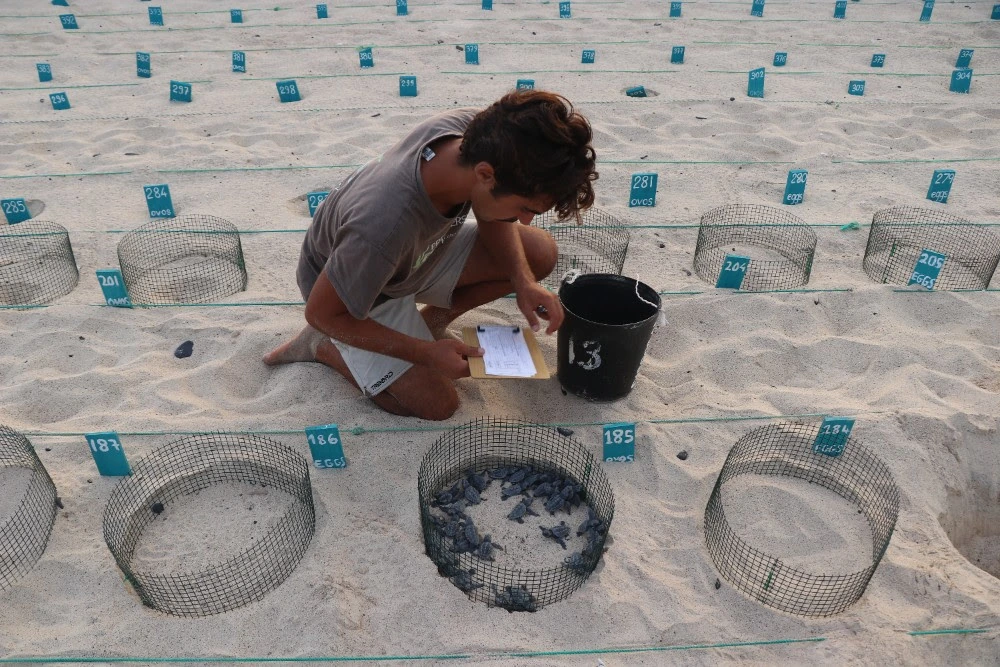
What’s more, 7,576 turtles were monitored, and 169 were rescued.
Projeto Biodiversidade recorded 36,587 nests on the island of Sal. A total of 2,225 were protected in hatcheries, one of which is located in front of RIU’s hotels. The hatch rate reached over 82%, and 115,962 hatchlings were released into the sea.
A 17-mile stretch of coastline was patrolled, and 1,645 turtles were monitored.
On Sal, the hatcheries were shaded to help reduce the egg incubation temperature. Just a couple of degrees makes a difference in increasing the proportion of male turtles, a key measure to counteract the effects of climate change.
BIOS Cape Verde also continued experiments on nests to mitigate the effects of global warming and obtained promising results in terms of hatchling sex ratios.

The organizations also report good news that there has been a significant reduction in poaching over the last few years, falling from 440 cases in 2021 to just 110 in 2024 on the island of Sal. The nurseries are monitored by volunteers from both organizations, supported by RIU, which provides food at the beach surveillance team’s camps.
RIU is involved in programs to protect a variety of animal species and their habitats in Mexico, Jamaica, Mauritius and Aruba, where it supports projects that work to preserve jaguars, green macaws, whale sharks and cottontail rabbits, among other species that enrich our travels and our wonder of the world we live in.
Images courtesy of RIU Hotels & Resorts and their partner organizations.
All rights reserved. You are welcome to share this material from this page, but it may not be copied, re-published, broadcast, rewritten or redistributed.
by Lynn Elmhirst on 05/08/2025
Beginning in 2026, fans of Trafalgar tours have another way to enjoy the expert guidance, meaningful local experiences, cultural immersion and ease of travel they’ve come to expect from their Trafalgar trips. In fact, with the company’s new river cruise ships, you’ll now be able to unpack once for your entire journey as your floating hotel transports you to one Trafalgar experience after another.
The company, which is part of The Travel Corporation (TTC) family of travel brands, is launching 2 river cruise ships that set sail in the Spring of 2026. Each will sail a different river, the two most popular rivers to cruise in Europe: the Rhine and the Danube.
The two ships come from within the ‘family.’ One of TTC’s brands is Uniworld Boutique River Cruises, and two of Uniworld’s river ships are now sailing as Trafalgar Reverie and Trafalgar Verity. Each is home to 128 guests.
While both Trafalgar and Uniworld are part of The Travel Corporation, they offer distinct experiences. Uniworld is reminiscent of a boutique hotel, offering an ultra-luxury, all-inclusive experience for travelers seeking the highest level of elegance and personalized service.
When you river cruise on Trafalgar, you’ll experience guided cultural journeys with Trafalgar’s signature warmth, local connection, and ease, offering a flexible and accessible way to explore Europe’s rivers.
Each Trafalgar sailing includes
giving travelers the support they want without paying for extras they may not use.
Trafalgar begins with two new journeys, an 8-day cruise along the Danube on the Trafalgar Reverie and a 10-day cruise along the Rhine on the Trafalgar Verity.
Best of the Danube: 8-Day Cruise Aboard Trafalgar Reverie
Explore Europe’s rich history and vibrant cultures from Budapest to Passau aboard the 128-passenger Trafalgar Reverie. With a setting as elegant and inviting as its planned journey, the Trafalgar Reverie is fabulously designed with multiple lounges for gathering, a massage room, a fitness center, and seven cabin categories. Highlights include Budapest’s storied landmarks, Bratislava’s medieval charm, and Vienna’s famous café culture. Guests are invited to ‘Be My Guest’ at an exclusive dining experience at Austria’s oldest winery, Weingut Nikolaihof, hosted by the Saahs family, and discover Bratislava’s Cold War history during ‘Life Beyond the Iron Curtain,’ an extraordinary “Make Travel Matter” Experience. Optional extensions in Prague and Budapest allow further discovery.
Best of the Rhine and Amsterdam: 10-Day Cruise Aboard Trafalgar Verity
Travellers aboard the 128-passenger Trafalgar Verity, with its charming 1930s vibe, rich blue and white fabrics, marble-accented bathrooms and boutique hotel elegance, will journey from Basel to Amsterdam, encountering landmarks such as the UNESCO-listed Cologne Cathedral, the romantic Middle Rhine Gorge, and Strasbourg’s charming old town. On this journey, the ‘Be My Guest’ experience visits the Bohrers for lunch at their family-run farm, where for generations they’ve cultivated fresh produce, and guests will learn about artisanal vinegar production during a “Make Travel Matter” Experience at Weinessiggut Doktorenhof. Like its sister ship, Trafalgar Verity offers seven cabin categories and an optional extension in Lucerne.
Images courtesy of Trafalgar.
All rights reserved. You are welcome to share this material from this page, but it may not be copied, re-published, broadcast, rewritten or redistributed.
by Lynn Elmhirst on 05/08/2025
AmaWaterways has debuted the AmaMagdalena, the first-ever major river cruise line ship to navigate Colombia’s Magdalena River. The launch opens a completely new cruise destination for fans of river cruising looking to add to their collection of exotic river cruises beyond Europe.
With the launch, you can now cruise on AmaWaterways or other river cruise lines on the Amazon in South America, as well as Africa’s Nile and Chobe rivers, the Ganges in India, the Mekong in Vietnam, and more.
The AmaMagdalena was custom-designed for river cruising on Colombia’s Magdalena River, including her intimate size, for just 60 guests. The cruise line collaborated with Colombian designers, craftspeople and woodwork specialists to bring the heart and soul of the region onboard.
The ship’s creative vision was inspired by the region’s natural beauty to offer an intimate, upscale experience. The interiors of the staterooms, which range from 237 to 516 square feet, feature AmaWaterways’ signature twin-balcony design, and the design of the ship was customized with local handcrafted woodwork.
Onboard amenities include a Sun Deck pool, a spacious fitness room, a Main Restaurant offering regionally inspired Latin American cuisine alongside Western favorites, and an intimate al fresco specialty dining venue.
Rudi Schreiner, co-founder and CEO of AmaWaterways, says, “We are proud to be the first major river cruise line to explore the Magdalena River, a region that until now has been largely inaccessible. AmaMagdalena opens the door to a culturally rich destination, and we’ve worked closely with local communities to ensure our presence benefits everyone involved - from our guests to the people who call this river home.”

AmaWaterways is offering 2, 7-night itineraries on the Magdalena River. Both the Magic of Colombia and Wonders of Colombia itineraries sail between Cartagena and Barranquilla.
Both include unique cultural highlights such as a private celebration of the world-famous Barranquilla Carnival, a guided heritage tour and exclusive jazz performance in the UNESCO-designated city of Mompox, birdwatching of rare endemic species and a musical and historical exploration of Palenque—the first free town in the Americas. Optional pre- and post-cruise land packages are available in Medellín, Cartagena and Panama City.
AmaWaterways’ expansion into Colombia has been supported by local stakeholders, with a shared commitment to responsible tourism and community engagement. Through training initiatives and collaboration with local leaders, the program aims to create meaningful economic opportunities for riverside communities while preserving the cultural and ecological integrity of the region.
Later in 2025, AmaWaterways will launch AmaMelodia, its second ship on the Magdalena River, further expanding the company’s presence in Colombia.
Family-owned and operated for 23 years, AmaWaterways offers unparalleled river cruise experiences with 31 custom-designed ships sailing Europe’s major rivers; Southeast Asia’s Mekong River; Africa’s Chobe River; Egypt’s Nile River and Colombia’s Magdalena River. The company was recently voted “Best River Cruise Line” and is renowned for its warm and welcoming crew, innovative and sustainable ship design, wellness activities (including a wide choice of included small group shore excursions featuring biking and hiking options), and award-winning, locally sourced cuisine paired with complimentary fine wine.
Modern, spacious, and tastefully decorated, most AmaWaterways ships welcome an average of just 150 guests and feature onboard amenities such as a stunning Main Lounge, specialty Chef’s Table restaurant, hair and massage salons, Sun Deck walking track and heated outdoor swimming pools with swim-up bars.
Images courtesy of AmaWaterways
All rights reserved. You are welcome to share this material from this page, but it may not be copied, re-published, broadcast, rewritten or redistributed.
by Lynn Elmhirst on 04/24/2025
 Sue Lamb
Sign up for our newsletter to learn about the latest product news and deals. Also receive exclusive offers, contest details and giveaways.