
Castles top the list of sights we want to discover when we travel. They let us walk in the very footsteps of history, where battles were won and lost and epoch-changing events took place. Castles were inhabited by history-makers and doers of deeds that became the basis for fairytales and legends that defined the romance of centuries past.
As defensive fortifications, they were often extraordinary structures built in extreme landscapes, and we marvel at the ingenuity and craftsmanship that managed to perch massive castles on hilltops, the edges of cliffs, on remote islands and in other impossible places.
As I describe castles, you are probably picturing Europe – those turreted, stone buildings that are central to fairytales and fantasy fiction.
But Europe is not the only place in the world where historic leaders built castles that would stand the test of time.
Japan, too, is a country of castles. While many countries in Asia and elsewhere have palaces – luxurious residences for royalty – Japan alone has a striking number of castles.
Japan had a feudal system, where regional lords had to control their lands and defend themselves and their subjects from invasion during power struggles. The robust samurai culture contributed, too. Local samurai needed headquarters. Japanese castles were not just military fortresses but also symbols of culture and status. Many castles were designed with beautiful gardens, ceremonial spaces, and administrative functions. The castle's architectural form evolved over time, with the addition of ornamental elements like main keeps, turrets, moats and multi-layered defensive walls. This evolution of style and design led to the creation of numerous castles with unique features.
So if you love castles, you’re going to want to plan a trip to Japan to see these:
Himeji Castle (pictured, top), often called the "White Heron Castle" due to its elegant, white exterior, is a UNESCO World Heritage Site and one of Japan's most iconic landmarks. Located in the Hyogo Prefecture, it is the largest and best-preserved feudal-era castle in Japan. Dating back to 1581, it stands as a prime example of Japanese castle architecture. The structure features expansive grounds, with a labyrinth meant to protect it from invaders. Visitors can explore the main keep, walk along the castle walls, and enjoy panoramic views of the surrounding city. The castle is renowned for its beautiful cherry blossoms in spring.
Matsumoto Castle (pictured, below), also known as the "Crow Castle" because of its striking black exterior, is one of the oldest surviving castles in Japan, dating back to the 16th century. Unlike many other castles, Matsumoto Castle has retained much of its original wooden structure. It stands out due to its unique combination of defensive design and aesthetic elegance. The castle in Nagano prefecture is surrounded by a moat, and its main keep offers visitors beautiful views of the Japanese Alps. Matsumoto Castle is particularly famous for its picturesque appearance, especially during the cherry blossom season.
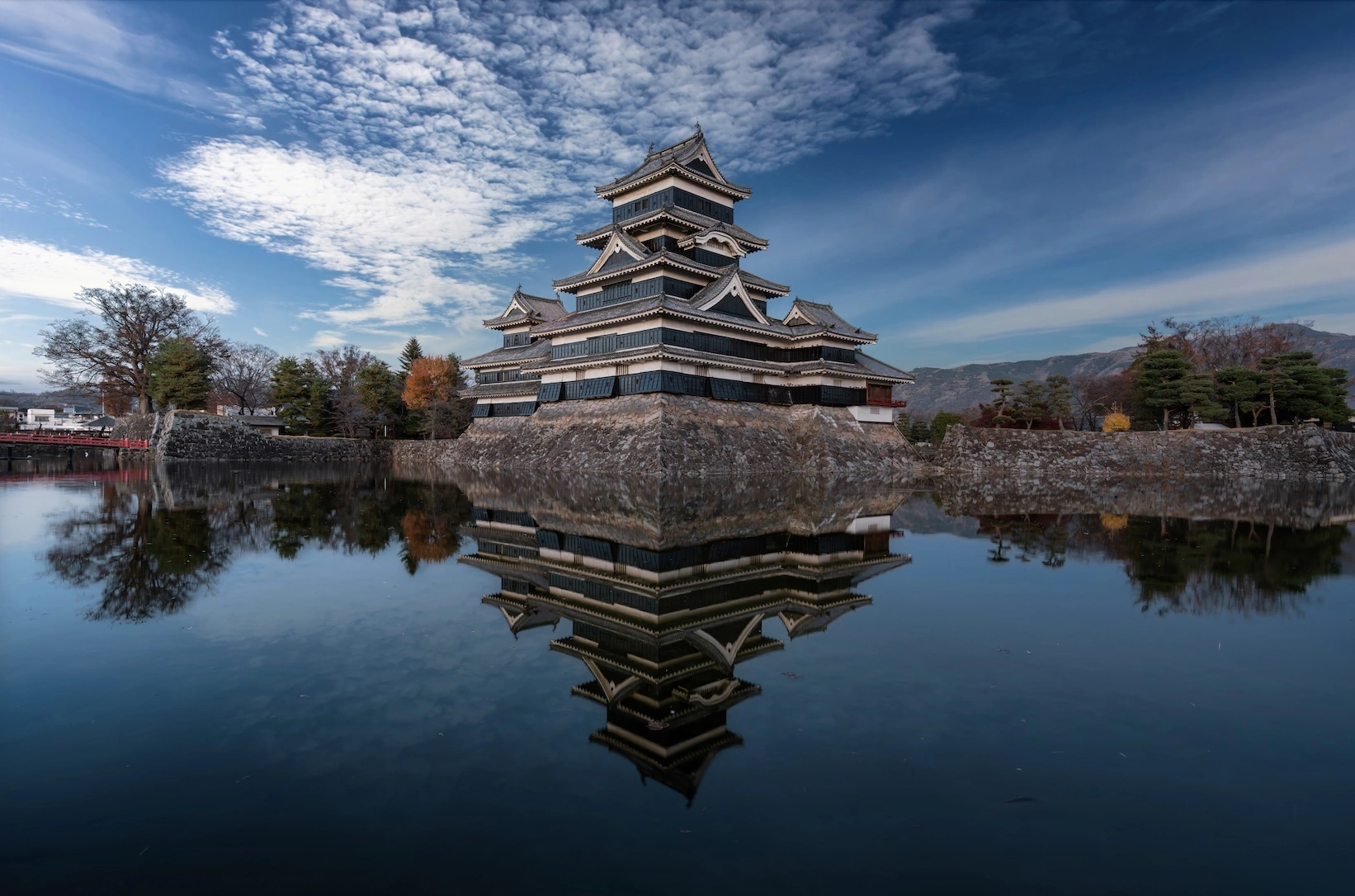
Nagoya Castle was originally built in the early 17th century as the residence of the Tokugawa shogunate’s Owari branch. The castle is famous for its golden "shachihoko" (a mythical creature with the head of a tiger and the body of a fish) ornaments atop the roof, symbolizing protection from fire and disasters. The castle is also known for its massive stone walls and its beautiful gardens.
Osaka Castle, built in the late 16th century by Toyotomi Hideyoshi, is one of Japan's most famous urban landmarks, in the heart of its second biggest city. It played a major role in the unification of Japan. The castle's main keep is surrounded by expansive grounds, including gardens, moats, and defensive walls. The panoramic views from the top of the castle are a highlight, especially during cherry blossom season.
Kumamoto Castle, one of Japan’s largest and most impressive castles, is known for its imposing stone walls and unique architectural design. The castle was built in the early 17th century by the Kiyomasa Kato clan. It features multiple layers of defensive walls and gates, and its main keep is a striking black-and-white structure. The castle grounds also include beautiful gardens and traditional Japanese-style buildings. Although the castle suffered significant damage during the 2016 Kumamoto earthquake, restoration efforts are ongoing.
Shuri Castle (pictured below), located in Okinawa, was the royal residence of the Ryukyu Kingdom. Unlike many castles in mainland Japan, Shuri Castle reflects unique Okinawan architectural styles, with vibrant red roofs and intricate decorations. Originally built in the 14th century, the castle served as the political and cultural center of the Ryukyu Kingdom. It was destroyed during World War II but was reconstructed in the 1990s. Shuri Castle is a UNESCO World Heritage site and offers visitors a chance to explore the history and culture of Okinawa.
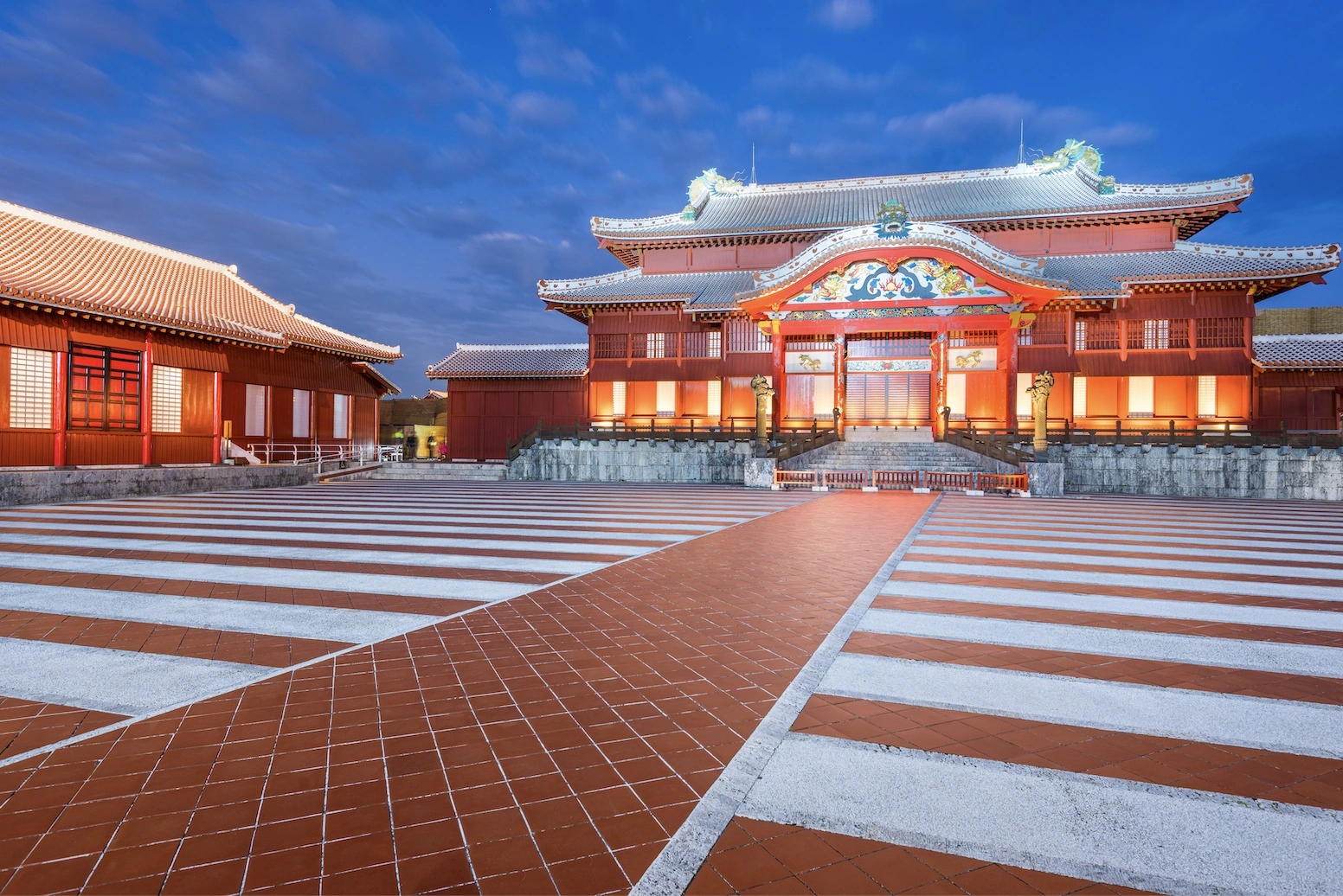
Nijo Castle, built in the early 17th century as the residence of the Tokugawa shogunate's Kyoto branch, is famous for its beautiful gardens and the "nightingale floors" that chirp when walked upon, designed to alert occupants to intruders. The castle is an excellent example of traditional Japanese architecture, featuring ornamental sliding doors and painted screens. The grounds also contain a beautiful garden with ponds and scenic walks. Nijo Castle is designated as a UNESCO World Heritage site and is an important historical site for understanding the culture and power of the Tokugawa shogunate.
Hikone Castle, built in the early 17th century, is one of the few original castles in Japan that has survived intact. The castle is located near Lake Biwa and features a beautiful stone keep, a classic example of Japanese castle architecture. The interior of the castle houses historical exhibits, and the surrounding grounds are home to a lovely garden with seasonal flowers, including plum and cherry blossoms.
These castles not only showcase Japan's rich shogun history but also highlight the artistry and military ingenuity that went into their construction. Whether for their defensive strength, architectural beauty, or historical significance, these castles remain iconic symbols of Japan's feudal era.
Images: Getty
By: Lynn Elmhirst, travel journalist.
All rights reserved. You are welcome to share this material from this page, but it may not be copied, re-published, broadcast, rewritten or redistributed.
by Lynn Elmhirst on 04/10/2025
Norwegian Cruise Line’s newest ship has arrived in North America ahead of its christening – and its Aqua Slidecoaster, the world’s first hybrid rollercoaster and waterslide, is already going viral.
The latest attraction at sea features a high-speed powered launch that propels adventurous guests through one of two different courses across three decks. With dual slides, guests can have two unique experiences on this first-of-its-kind attraction.
WATCH THE AQUA SLIDECOASTER VIDEO HERE!
The new Norwegian Aqua is 10 percent bigger in size and capacity than her sister ships Norwegian Prima and Norwegian Viva.
Norwegian Aqua offers activities bow-to-stern for everyone. For the guests who prefer to kick back and relax, the adults-only Vibe Beach Club provides even more space with outdoor loungers and cabanas overlooking sweeping ocean views. Guests can also retreat to the Mandara Spa and Salon for rejuvenating treatments, tranquil saunas, and invigorating spa services. The ship offers an expanded pool deck equipped with day beds that are perfect for lounging in the warm Caribbean sun.
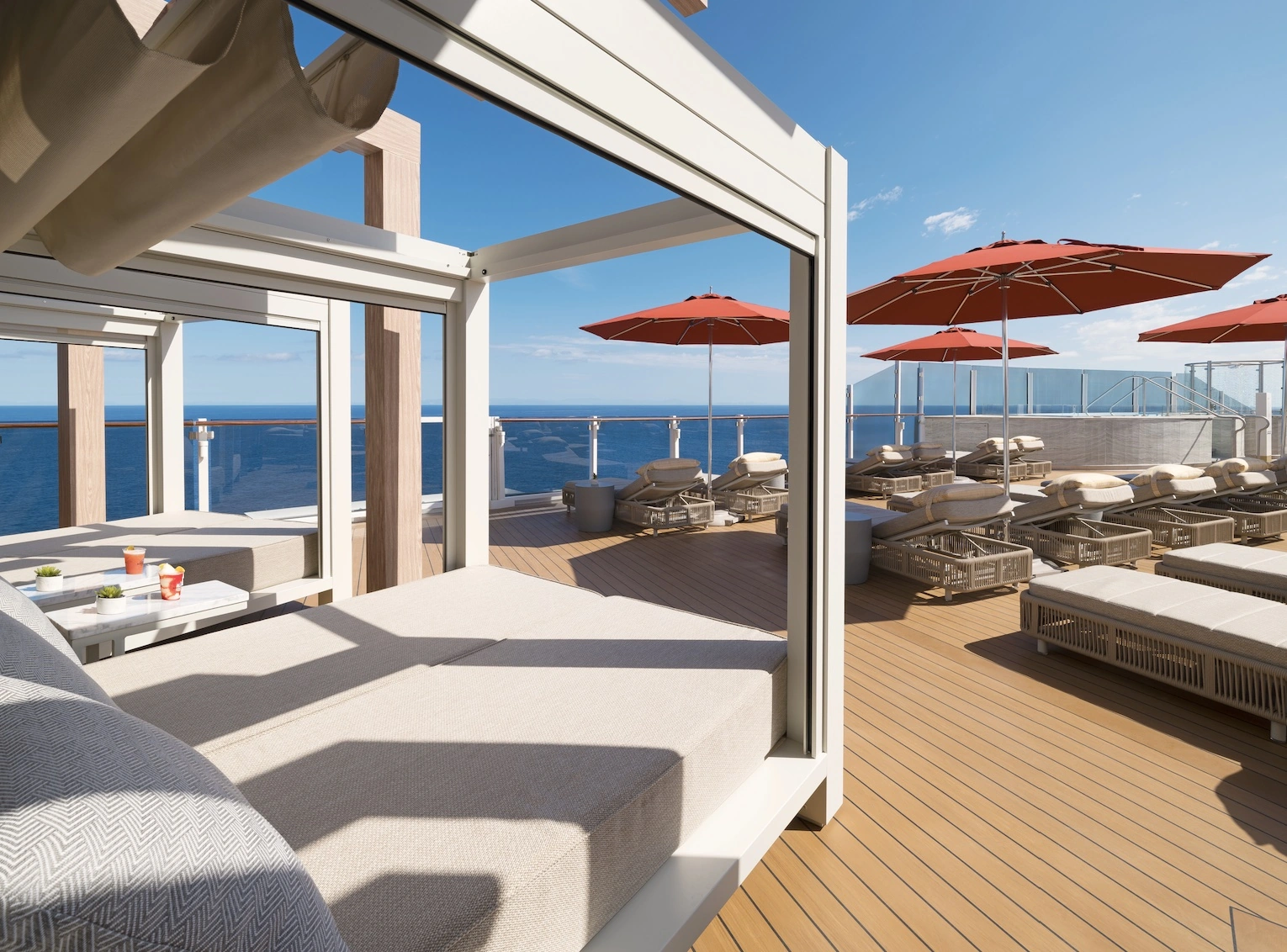
Families and active adults can revel in attractions such as the outdoor activity complex, The Stadium; as well as The Drop, the 10-story jaw-dropping dry slide; and the Bull’s Eye Bar where guests can enjoy a game of interactive darts with a beer or cocktail in hand. Food and beverage enthusiasts can savor in Norwegian Aqua’s 17 dining options and 18 bars and lounges including the redesigned Metropolitan Bar which now features a grand piano for live entertainment.
Norwegian Aqua also features the brand-new Glow Court, a digital sports complex with an interactive LED floor, where guests can enjoy a variety of interactive activities by the day before the space transforms into a nightclub in the evening. The reimagined Aqua Game Zone offers a fun-for-the-whole-family vibe with an array of virtual reality and classic arcade games such as Ms. Pacman, Mario Brothers and Duck Pin Bowling.

Guests can also look forward to Norwegian Aqua’s world-class entertainment lineup in collaboration with top industry talent, including “Revolution: A Celebration of Prince.” The immersive theatrical concert experience pays tribute to the legendary artist’s greatest hits. Other headline productions include “Elements: The World Expanded,” an enhanced version of NCL’s top-rated show, blending acrobatics, magic and stunning visuals inspired by the four elements: earth, wind, water and fire; as well as interactive shows such as the “Price is Right LIVE,” and MORE!
On April 13, 2025, Norwegian Aqua will officially be christened in Miami with a celebratory ceremony featuring godfather and two-time Emmy-Award-winning actor Eric Stonestreet.
Following her official christening, Norwegian Aqua will offer
featuring a visit to NCL’s private island in the Bahamas, Great Stirrup Cay, which will debut as a multi-ship pier in late 2025.
Images courtesy of Norwegian Cruise Line
All rights reserved. You are welcome to share this material from this page, but it may not be copied, re-published, broadcast, rewritten or redistributed.
by Lynn Elmhirst on 04/10/2025
Cruising just took a giant step towards becoming a lot cleaner and better for the environment and seas we love to sail. Viking and its shipbuilder, Fincantieri, have revealed they’re building the first-ever cruise ship powered by hydrogen, developed by a Fincantieri subsidiary specializing in advanced fuel cell technology.
That will allow the ship to operate with zero – yes, zero – emissions.
The ship has already been named the Viking Libra, and will be delivered, not years from now, but in 2026.
Zero emissions capabilities by 2026. That’s music to the ears of people who love to cruise but who also want to protect the world we explore.
Zero emissions will also allow the new ship to access even the most environmentally sensitive areas, opening up new – sustainable – cruise travel horizons for Viking passengers.
Viking isn’t stopping there. Its next ocean ship, the Viking Astrea, is also currently under construction. Scheduled for delivery in 2027, will also be hydrogen-powered.
The cruise line says it’s been focused on making progress in sustainability throughout Viking’s 30-year growth as a company.
“From the outset, we have designed our river and ocean ships thoughtfully to reduce their fuel consumption, and we are very proud the Viking Libra and the Viking Astrea will be even more environmentally friendly,” said Torstein Hagen, Chairman and CEO of Viking.
“Viking made the principled decision to invest in hydrogen, which offers a true zero-emission solution.”
"With the Viking Libra, we are not only delivering the world's first cruise ship powered by hydrogen stored on board, but we are also reinforcing our commitment to shaping the future of sustainable maritime transportation,” said Pierroberto Folgiero, CEO and Managing Director of Fincantieri.
He says that Viking’s order of two additional ships “is a testament to our shared vision for a more sustainable cruise industry, as together we continue to set new standards for innovation and responsible shipbuilding."
Viking’s ocean ships are considered ‘small ships,’ and like her sister ships in the ocean fleet, the Viking Libra will host just under 1000 guests.
Viking and Fincantieri also announced two additional ocean ships for delivery in 2031 and an option for two additional ocean ships for delivery in 2033. With these orders, Viking will have 110 river ships by 2028 and 23 ocean and expedition ships by 2031.
Viking was founded in 1997 and provides destination-focused journeys on rivers, oceans, and lakes around the world in its river, ocean and expedition ships.
Designed for curious travelers with interests in science, history, culture and cuisine, Chairman and CEO Torstein Hagen often says Viking offers experiences “For The Thinking Person.” Viking has more than 450 awards to its name, including being rated #1 for Rivers, #1 for Oceans and #1 for Expeditions by Condé Nast Traveler in the 2023 and 2024 Readers’ Choice Awards. Viking is also rated a “World’s Best” for rivers, oceans and expeditions by Travel + Leisure. No other travel company has simultaneously received the same honors from both publications.
Image: Viking
All rights reserved. You are welcome to share this material from this page, but it may not be copied, re-published, broadcast, rewritten or redistributed.
by Lynn Elmhirst on 04/10/2025
More people visit the Louvre in Paris than any other museum in the world. The French President has announced a sweeping renovation plan for the iconic institution, to the tune of about 800 million euros over the next decade.
It’s hard to believe that the last time the Louvre had a makeover was over 30 years ago! That’s when I.M. Pei’s glass pyramid was added to the courtyard to serve as the museum’s main entrance.
Remember when that contemporary glass pyramid in the courtyard of the 16th-century royal palace in the heart of historic Paris was controversial? Now, next to the Eiffel Tower, it’s the most iconic view of Paris.
But when that pyramid entrance was opened in 1989, it was designed for 4 million visitors a year. That number now is actually closer to 10 million – and rising, with visitation expected to reach 12 million annually in the coming years.
So it does seem time to rethink and update this global treasure of culture.
Here’s what’s planned for the Louvre – and how it could affect your visit.
In addition to the entrance through the pyramid, a new entrance will be built at on the east side of Colonnade de Perrault, a historic section of the Louvre, to take the pressure off and disperse the crowds at the pyramid entrance.
The new entrance will replace the pyramid as the main entrance and will reconnect the Louvre entrance to the city of Paris.
10 million people every year visit the world’s most famous work of art. Leonardo da Vinci’s masterpiece is the most popular woman on the planet – and large crowds in her current gallery are making viewing the 16th-century painting difficult.
The Mona Lisa is, in fact, quite small, and crowding means some people end up using the zoom function on their cameras just to get a glimpse of the artwork they came to the museum just to see.
The Mona Lisa will now get her own, specially designed gallery beneath the Cour Carrée, a square courtyard inside the Louvre. It will have its own entrance – and require a specific ticket.
That lets visitors choose to see the Mona Lisa independently of the rest of the Louvre’s galleries.
Louvre officials also say that will allow visitors to appreciate the ‘other Mona Lisa’s’ at the Louvre, including the masterpieces currently sharing the same space as the Mona Lisa, which are often ignored as crowds jostle to see the Mona Lisa.
Along with the new gallery just for the Mona Lisa, additional galleries will be built beneath the Cour Carrée. The new underground spaces will allow for special exhibitions and expanded gallery space without detracting from the Louvre’s historic exterior (as in: no extensions!)
That will allow the Louvre to show more of its vast collection and rotate temporary, themed exhibits.
The Louvre will undergo a makeover on the outside, too.
The area around the museum, called the Esplanade will be redesigned to integrate better with the city surrounding it, like the Pont Neuf, the oldest bridge in Paris.
Restoration of the Carrousel and Tuileries gardens is also planned, with a full revitalization of the famous gardens with new plantings of trees and flowers more pathways and seating areas to welcome visitors before or after their museum visit.
Or just to walk hand in hand with their lover through the green space as Parisians have done for centuries.
The Cour Carrée is in need of repairs, too, to restore its historic features and accommodate the new entrance.
You guessed it. A lot of the funding for these expensive renovations will need to come from the visitors themselves.
Beginning January 1, 2026, anyone visiting the Louvre from outside the EU will pay more to get inside. The amount of the increase has not yet been announced.
Other sources of funding for the renovations will come from donations and funding from the Louvre’s partnership with the Louvre Abu Dhabi.
Image: Getty
All rights reserved. You are welcome to share this material from this page, but it may not be copied, re-published, broadcast, rewritten or redistributed.
by Lynn Elmhirst on 04/10/2025
Sydney’s one of the most famous harbor cities in the world. From the beautiful natural harbor that is central to Sydney’s identity to the unmistakeable silhouette of the Sydney Opera House, the drama of the Sydney Harbour Bridge and the legendary beaches that foster a coastal lifestyle of surfing, sunbathing, barbecue parties and boating, Sydney is all about its one-of-a-kind outdoor lifestyle.
With its breathtaking landscapes, stunning coastal views, and some renowned trails, Sydney’s already a hiker’s paradise. Now a new walking track captures iconic scenic views and Sydney’s heritage from a whole new angle.
The new walking track, linking Middle Head–Gubbuh Gubbuh and Georges Head, is now open in Sydney Harbour National Park. In addition to providing walkers with an iconic, scenic harbor experience, with new lookout points and even a new bridge with views across the harbor, what really sets this new trail apart is how it showcases the area’s military heritage.
The nearly-2-mile walking track immerses visitors in over 220 years of Sydney’s defence history with a collection of restored defence structures, dating from 1801 all the way to the Vietnam War. Installations, including signage and digital installations, bring to life the site’s rich past.
This multi-million dollar project took six years to complete. It delivers the missing link between the headlands of the Park, and connects to Chowder Bay and the Bondi to Manly Walk, creating a seamless walking experience for visitors.
Now you can walk through restored World War II twin 6-pounder gun casemates and military fortifications such as the Inner and Outer Defensive Ditches, which were carved around the headland to protect fortifications from land-based attacks.
The new bridge across the large Outer Defensive Ditch is the place that offers stunning views across Sydney’s foreshore and inner harbour.
Visitors can also see the re-furbished 19th century former New South Wales School of Artillery buildings sitting as they would have 150 years ago.
There’s even the ‘Engine Room,’ located at the Outer Fort at Middle Head, which was re-purposed in the 1950s to prepare Army officers for possible capture and interrogation during the Malayan Emergency and later Vietnam War and holds the notorious ‘Tiger Cages’.
The new track is the newest addition to Sydney’s already robust collection of unique and scenic trails and walks. Lace up your walking shoes and hit these other tracks in Australia’s capital:

The new trail helps fill in a gap in the trail system that already exists in Sydney Harbour National Park. The 1-mile, North Head Walk in Sydney Harbour National Park takes you through beautiful coastal bushland, with views of the harbour, the city skyline, and the Pacific Ocean. It’s a great option for a shorter hike, perfect for a few hours of exploration.
This scenic 6-mile trail takes you from Spit Bridge to Manly, offering an impressive mix of bushland, beaches, and harbour views. The walk crosses several small beaches and coves and provides opportunities for birdwatching and enjoying the serenity of Sydney Harbour. It's a well-maintained path, with both easy and moderately challenging sections, making it perfect for an active day out.
One of the most iconic coastal walks in Sydney, the Bondi to Coogee Walk offers breathtaking ocean views. This 4-mile trail connects two of Sydney’s most famous beaches, Bondi and Coogee, passing through several smaller beaches. Along the way, you'll see dramatic cliffs, rock pools, and stunning coastal flora. It's a fairly easy walk, perfect for travelers who want a relaxed yet scenic journey.
Feeling more ambitious? Located just south of Sydney, the Royal National Park offers a range of hiking trails, with the Coastal Track being one of the most popular. This 16-mile trail follows the coastline, providing magnificent views of cliffs, beaches, and rainforests. The trail can be completed in one or two days, and highlights include Wedding Cake Rock, a striking white sandstone formation, and the serene Figure Eight Pools. This is a slightly more challenging hike, ideal for those looking for a full day or overnight adventure.
Top Image: Aerial shot of Obelisk battery observation tower and casemate, looking toward Obelisk Beach, Sydney Harbour National Park Image Credit: DCCEEW
Bottom Image: Getty. View from Royal Botanic Garden Sydney
All rights reserved. You are welcome to share this material from this page, but it may not be copied, re-published, broadcast, rewritten or redistributed.
by Lynn Elmhirst on 03/27/2025
Planes, trains… and sustainability. Adoption of ‘integrated intermodal travel’ is speeding faster than a locomotive around the world, especially in Europe and Asia, and it could mean the next time you book a flight, your journey - and ticket - will include a leg on a train or even a bus.
The key to ‘integrated intermodal travel’ is the ‘integrated’ part. It involves seamlessly switching between modes of transport in a way that’s efficient and cost-effective, typically with pre-arranged connections and schedules that minimize the time spent in transit.
In fact, more and more intermodal travel even adds points to your airline loyalty program’s bottom line!
Switching between modes in an organized, pre-arranged way is usually more:
Trains have a smaller environmental impact than flying – especially on shorter routes, as most fuel is expended for takeoff and climbing to cruising altitude.
A train can carry a larger number of passengers at once with less energy per passenger mile. Electric trains, in particular, are more efficient when they are powered by renewable energy sources. And trains – again, especially electric ones – create far less noise and air pollution than airplanes.
Eurostar says that flying from London to Paris emits 14 times more CO2 than traveling the same route by the just-over-two-hour train ride.
Once you take the time consumed by airport lineups to check in, check baggage and go through security, add in a delay boarding, a queue of planes waiting to be cleared for takeoff or having to circle your destination airport until your plane can land… it can be a lot faster to take the train.
And cheaper.
For example, one report compares traveling from Rome to Florence by train and by plane: it takes over double the time and nearly 3 times the cost to take the plane.
Countries and transportation companies are waking up and smelling intermodal integration. Some are voluntary – but some is mandated.
A number of European jurisdictions have started banning short-haul flights, forcing the issue.
What does that look like for you? Your trip to a European destination could involve an overseas first leg of your journey and instead of a second, smaller flight, transiting to a train at the airport that takes you to your final destination.
That’s breathed new life into relationships between air and rail companies and sparked a rail revival, with a burst of infrastructure enhancement: rail hubs at airports, and overall rail networks, including a return of the popularity of night trains.
But it’s about more than more trains, more routes and more station hubs at airports.
Technology is making integrated intermodal travel simple, smooth and hassle-free, taking away booking and timing issues, coordinating bookings between modes in one system and removing other pain points that made switching from plane to train and beyond a challenge.
Just as airlines partnered up in networks that made flying on different airlines within the network seamless, new modes are being added to networks.
Here’s one recent announcement, from the airline industry’s biggest Star Alliance – announcing the latest integration with its over 2 dozen international airlines: with an Austrian rail system:
“The partnership is founded on ÖBB and Austrian Airlines' long-standing cooperation to offer rail-to-air connectivity, known as AIRail, which was launched in 2014. It has allowed passengers to travel conveniently between major Austrian cities and Vienna Airport by train, with integrated ticketing and check-in services.
Introduced in August 2022 with Germany's Deutsche Bahn, the Star Alliance Intermodal Partnership model makes it possible to intelligently combine an alliance-wide airline network with a railway, bus, ferry or any other transport ecosystem. It further links loyalty systems and facilitates seamless airport/station/port transit. Benefits to customers include:
More booking convenience:
In a single booking process, customers will receive a combined ticket for the flight and train journeys including seat reservation.
More check-in convenience:
Customers can check in online or at one of the ÖBB Travel Centers in Graz, Linz, Salzburg and Innsbruck and receive boarding passes for both flight and train journeys.
More choice:
Customers will have even more choices based on timings, duration and prices offered.
More benefits:
With a combined ticket, customers can earn points or miles for their train journey in the preferred frequent flyer program of a Star Alliance member airline.”
It’s safe to say the future will bring more integrated intermodal travel – and its many benefits - into our lives, with savvy travelers working with their travel advisors to optimize all available options and reshape our trip plans.
By: Lynn Elmhirst, travel journalist and expert.
Image: Getty
All rights reserved. You are welcome to share this material from this page, but it may not be copied, re-published, broadcast, rewritten or redistributed.
by Lynn Elmhirst on 03/27/2025
Four Seasons Yachts is set to debut in January 2026, and when its first small-ship, ultra-luxury vessel takes to the seas, it will be helmed by a very familiar figure. One might even say, a “Celebrity.” Captain Kate McCue has moved from Celebrity Cruises to the new cruise line.
Even cruise aficionados who have never sailed on Celebrity have likely heard about ‘Captain Kate.’ She made history in 2015 as the first American woman to captain a mega-ton cruise ship, and in her time at Celebrity, has become something of a social media superstar, posting about her life at sea (with her cat, who sadly passed away recently, gaining its own avid following.)
During Captain Kate’s decade with Celebrity Cruises, she played a key role in increasing female representation on ship bridges to more than 30% across the fleet. She has also held numerous maritime positions, from cadet and deck officer to Master Mariner and Captain and has sailed with Royal Caribbean International and Disney Cruise Line.
A graduate of the California Maritime Academy, Captain Kate brings nearly three decades of maritime expertise, combining technical precision with a passion for hospitality for the modern age that Four Seasons says it’s eager to tap to create a truly transformative yachting experience on its new fleet.
“Captain Kate McCue is the ideal leader to helm Four Seasons I as we embark on this exciting new chapter,” says Rainer Stampfer, President of Global Operations, Hotels and Resorts, Four Seasons. “Her passion for hospitality, commitment to excellence, and trailblazing leadership align perfectly with our vision to re-imagine the yachting experience.”
As Captain, McCue will be responsible for the safe navigation of the Yacht, as well as the onboard experience for all guests and crew members.
“Yachting truly embodies the essence of the sea – calm, effortless, and deeply rejuvenating. This is the same philosophy behind Four Seasons I,” says Captain Kate.
“This role is both an incredible honour and an exciting opportunity to shape the Four Seasons Yachts experience from the very first voyage. I look forward to doing what I love most – connecting with guests, leading an exceptional crew, and engaging with local communities. Together with our crew, we’ll craft unforgettable journeys and set new standards in luxury yachting, ensuring every milestone is a celebration of Four Seasons legendary service and innovation.”
This new brand in ultra-luxury, small-ship cruising brings together three fabled brands: luxury yachting company Marc-Henry Cruise Holdings LTD, Joint Owner/Operator of the new cruise line, venerated Italian shipbuilder Fincantieri, and legendary Four Seasons hospitality.
With 95 residential-style suites and a 1:1 crew: guest ratio, Four Seasons Yachts will extend the renowned luxury hospitality brand to the sea. The Yacht also features a 9,975 square feet Funnel Suite's iconic floor-to-ceiling wraparound curved glass window modules, made up of the largest contiguous piece of glass at sea; and a bespoke onboard transverse marina featuring expansive openings across the vessel from port to starboard.
Setting sail in January 2026, winter and spring itineraries in the Caribbean will be followed by Mediterranean itineraries in the summer season each year. All voyages are styled to immerse guests into the culture, history and natural splendor of each locale, and crafted with flexibility in mind to allow for exploring beyond the usual.
Image courtesy of Four Seasons Yachts.
All rights reserved. You are welcome to share this material from this page, but it may not be copied, re-published, broadcast, rewritten or redistributed.
by Lynn Elmhirst on 03/27/2025
Scotland’s so-called ‘Second City’ takes center stage in 2025 as it celebrates its 850th birthday. If you’ve only been to Edinburgh, it’s time to put Glasgow on the top of your Scottish travel list and discover its history and the thriving, vivid, cultural hub of modern Scotland on the River Clyde that’s even a UNESCO City of Music.
Far bigger than Edinburgh, Glasgow’s size exploded during the Industrial Revolution, which led to its reputation being compared negatively to Edinburgh’s perennial medieval and almost fairytale charms.
But Glasgow has thousand-year-old origins, too.
Glasgow's name comes from the Scottish Gaelic ‘Glaschu’, meaning ‘dear green hollow,’ reflecting its early pastoral setting along the River Clyde. The city traces its roots to the 6th century when its patron, St. Mungo—also called St. Kentigern—established a church. Glasgow’s Gothic cathedral was built in his honor beginning in the 12th century and remains one of the few Scottish medieval cathedrals still standing.
2025’s anniversary celebrations mark a date in the 12th century: 1175 when the town of Glasgow was given a charter formalizing its growing commercial status as a ‘burgh.’
In the early medieval period, the Glasgow region was part of the Celtic Kingdom of Strathclyde or the ‘valley of the River Clyde.’
You can’t overstate the importance of the River Clyde to Glasgow’s origins, history and journey. The River Clyde gave Glasgow its access to the sea – and set up Glasgow as a shipbuilding centre and transportation conduit during the 18th and 19th century’s Industrial Revolution, when Glasgow became Scotland’s booming industrial center and one of the biggest production hubs in the UK.

Today, Glasgow has embraced the 21st century, shifting from an industrial powerhouse to a science, technology and educational hub and city for the future.
Modern Glasgow is a beacon of landmark contemporary architecture as a counterpoint to its Gothic Glasgow Cathedral and elegant Victorian neighborhoods – and to historic Edinburgh!
A revitalized, re-greened Glaswegian riverfront is home to the Clyde Auditorium, affectionately known as ‘The Armadillo,’ the Riverside Museum, and The Clyde Arc. Glasgow’s first new bridge in nearly half a century physically and symbolically spans the River Clyde at the heart of Glasgow, with its innovative curved design crossing the river at an angle, earning it the nickname ‘The Squinty Bridge.’
Glasgow is also known now for its vibrant food scene, with local takes on some Scottish favorites. Indulge in a comforting bowl of Cullen Skink, enjoy a hearty, meaty Glasgow Pie, or sip on a cold Irn-Bru (not a beer, and definitely not whisky! But ‘Scotland’s other national drink.’ It’s a metallic sort of orange soda that becomes strangely addictive once you try it). There's plenty of food and drink unique to the city that begs visitors to pause for some street food or a sit-down in a local pub or restaurant.
Those are also the places where you’ll get to meet real Glaswegians. Renowned for their warmth, sociability and friendliness (as well as their music appreciation!) the people of Glasgow get out in their city, with an incomparable living culture – especially music! – as a UNESCO City of Music with a packed calendar of festivals and venues around every corner.
That’s what you’ll experience during Glasgow 850, a year-long program of celebrations of every aspect of history, life, music and culture in Glasgow.
Needless to say, this is a special year to visit Glasgow, but even if you don’t make it for Glasgow 850, make this first-rate city a must-visit stop on your next trip to Scotland.
By: Lynn Elmhirst, travel journalist.
Images: Getty
All rights reserved. You are welcome to share this material from this page, but it may not be copied, re-published, broadcast, rewritten or redistributed.
by Lynn Elmhirst on 03/27/2025
St. Patrick’s Day may be the day when we are all just a little bit Irish, but anytime we visit Ireland, we can bring home a little bit of Ireland – for our own memories, or to share an Irish blessing with our friends and loved ones.
The Emerald Isle is known for its vivid landscapes, love of life and literature, horse flesh and history, and perhaps above all, the embracing warmth of its people. Ireland is also a treasure trove of unique souvenirs that capture the spirit of the Emerald Isle and Irish culture. Whether you're looking for traditional crafts, delicious treats, or something quirky, Ireland offers a variety of keepsakes that make perfect mementos or gifts for loved ones.
Don’t leave it to the luck o’ the Irish! Plan ahead with this list of some of the top souvenirs to bring home from a trip to Ireland.

Originating from the Aran Islands off the west coast, these iconic woolen sweaters are not just stylish but also incredibly warm and durable. Traditionally hand-knit, each sweater carries unique patterns symbolizing different aspects of Irish heritage. Whether you purchase one from a high-end boutique or a local crafts store, an Aran sweater is a timeless keepsake that connects you to Ireland’s rural traditions.
Not a sweater person? Everyone can use a scarf, blanket or, for the dashing and stylish, an Irish cap. Ireland has a strong tradition of wool and tweed craftsmanship using wool sourced from the country’s famous flocks of sheep, particularly from Donegal and Kerry. Wool and tweed from Ireland are renowned as among the finest in the world. Shop for brands like Avoca, Foxford Woollen Mills, and Magee of Donegal, which offer exquisite handmade pieces that reflect Ireland’s textile heritage.

Not to be confused with Scotland’s ‘whisky,’ Ireland is world-famous for its ‘whiskey.’ Your own home bar and likely many of your friends would benefit from a bottle of this smooth, triple-distilled spirit. Distilleries such as Jameson, Bushmills, Redbreast, and Teeling offer premium options, while smaller craft distilleries provide unique varieties. Many distilleries also offer personalized bottles, making for a truly special gift or souvenir.
Interwoven Celtic knotwork designs are deeply woven into Ireland’s history, and jewelry featuring intricate Celtic knotwork is a wonderful souvenir for men and women. Bracelets, pendants, and earrings featuring these eternal symbols make for unmistakably Irish gifts. Many jewelers in Dublin, Galway, and Kilkenny offer handcrafted pieces that showcase Ireland’s artistic heritage.
Originating from the village of Claddagh in Galway, the Claddagh ring is a meaningful piece of Irish jewelry. Featuring two hands holding a heart topped with a crown, the ring symbolizes love, loyalty, and friendship. Whether worn as a token of romance or as a symbol of Irish heritage, a Claddagh ring is a timeless piece that carries deep cultural significance.

Irish pottery is known for its handcrafted quality and beautiful designs. Belleek Pottery, which dates back to 1857, is one of the most famous producers, creating hand-painted pieces featuring Ireland’s most renowned symbol, the shamrock, on a delicate ivory porcelain background. Nicholas Mosse pottery and Louis Mulcahy ceramics are also excellent choices, offering unique, colorful designs inspired by Ireland’s landscapes.
Irish crystal and glassware also make heirloom Irish souvenirs and gifts. Waterford Crystal (pictured, top) is world-renowned for its craftsmanship, offering beautifully designed glasses, vases, and chandeliers. While on the pricier side, these handcrafted pieces are a testament to Ireland’s rich heritage in glassmaking. And they’ll enhance any bar cart or elegant tablescape!
On the fun side, fans of Ireland’s famous black stout can find a wide range of memorabilia, from pint glasses and bottle openers to branded clothing and posters. A visit to the Guinness Storehouse in Dublin is a great way to learn about the brewing process while picking up some exclusive souvenirs from the store. And of course, have a pint or two of Ireland’s favorite beer to toast your trip!
If you find yourself tapping your toe and clapping your hands over a pint of Guinness in the local pub anywhere in Ireland, consider bringing home the spirit of Irish music. A tin whistle, bodhrán (traditional Irish drum), or even a fiddle are instruments deeply rooted in Irish folk traditions and make wonderful gifts for musicians or anyone interested in Irish culture - although it might be hard to take home an iconic Irish harp! You can also pick up CDs or vinyl from traditional local Irish bands where they perform.
The Irish love the written word as much as song and dance. Ireland has a long literary tradition, producing world-famous writers like James Joyce, W.B. Yeats, and Oscar Wilde. A book by an Irish author, a beautifully bound poetry collection, or even a replica of the Book of Kells makes for a wonderful literary souvenir or gift for the readers in your life. Many independent bookstores and museum gift shops offer exclusive editions that are perfect for book lovers.

The Atlantic coastline of Ireland is rich in seaweed, which has been tapped for its wellness benefits for eons, with numerous benefits for the health and skin now documented by modern science. Brands like Voya specialize in seaweed-based skincare products, including facial masks, body oils, and bath products. These luxurious, all-natural products make excellent gifts for those who love organic beauty items.
Ireland is known for its folklore, full of tales about fairies, leprechauns, and mythical creatures. Many souvenir shops sell fairy doors, figurines, and illustrated books about Irish mythology. These whimsical items make great gifts for children or anyone enchanted by Ireland’s magical folklore.
Images courtesy of Ireland.com
All rights reserved. You are welcome to share this material from this page, but it may not be copied, re-published, broadcast, rewritten or redistributed.
by Lynn Elmhirst on 03/13/2025
We’ve written before about a few of the many reasons it’s valuable to work with an expert travel advisor, and a new study has just revealed one more: a third of people who book their own travel online end up making crucial errors that can end up:
It’s all fun until you accidentally book a trip to Austria rather than Australia or Haiti instead of Tahiti!
It’s no laughing matter! Mistakes just like those happen more often than you think. And booking errors can lead to missed flights, denied boarding, and thousands of dollars in wasted, non-refundable costs.
Some new research points out the most common pitfalls of self-serve booking on travel websites:
The easy button you think you’ve taken by booking online could end up costing you your trip.
Some people may be catching on: the survey also shows a renewed interest in professional advice for travel planning and booking, with almost half of survey respondents saying they believe they get the best travel experience with professional assistance, as opposed to just 30% who feel confident relying solely on websites.
Does this sound like you? The biggest trend is travelers researching destinations online, then consulting a professional travel advisor, merging the convenience of using technology in your pajamas with reliable human expertise.
So we can add avoiding costly booking errors to the other reasons we recommend working with a travel advisor to book your next trip:
Image: Getty
All rights reserved. You are welcome to share this material from this page, but it may not be copied, re-published, broadcast, rewritten or redistributed.
by Lynn Elmhirst on 03/13/2025
 Sue Lamb
Sign up for our newsletter to learn about the latest product news and deals. Also receive exclusive offers, contest details and giveaways.